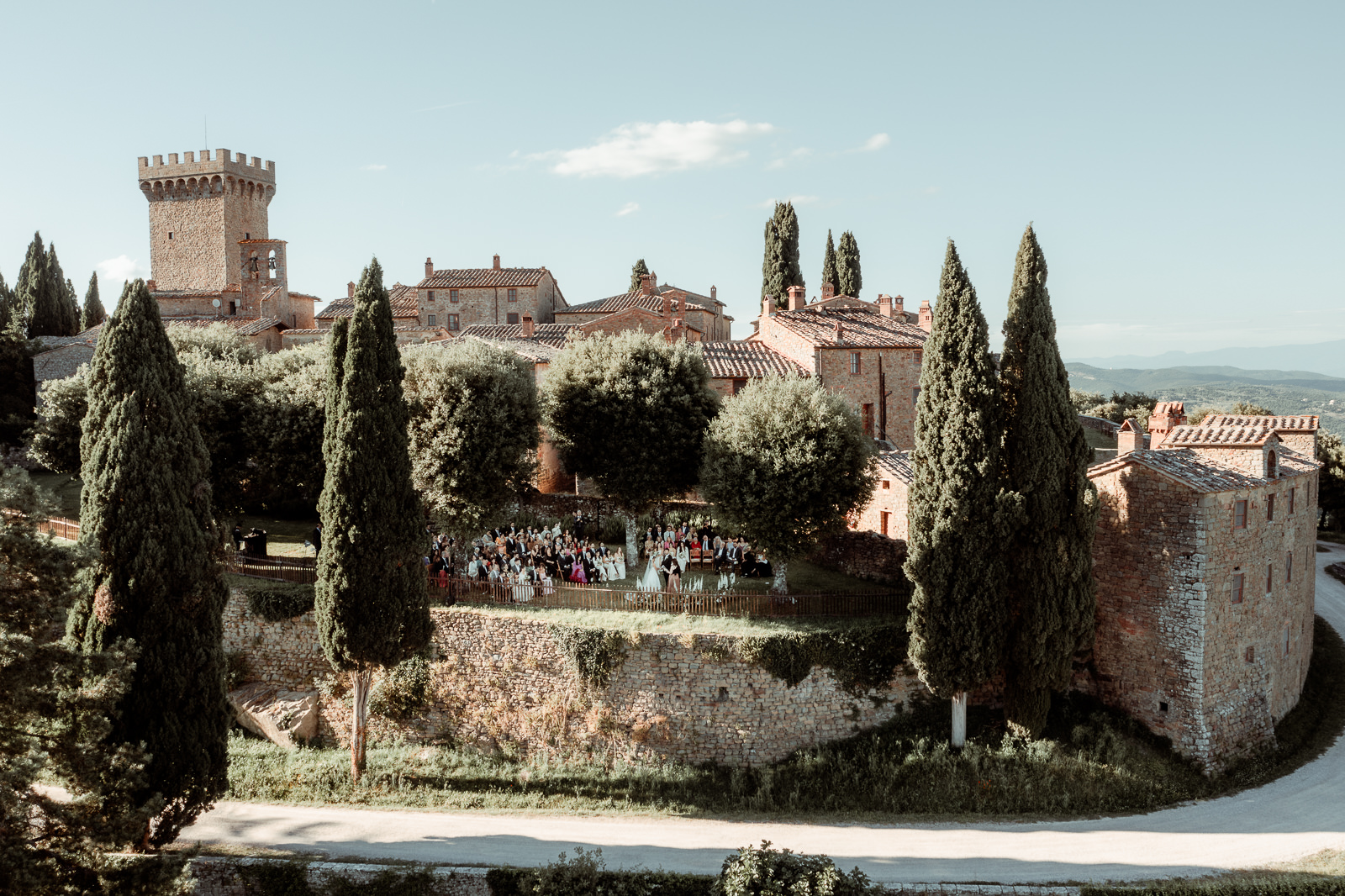
How much does a destination wedding in Europe cost? Most guides will tell you it can be anywhere between €20,000 and €300,000. That range is accurate, but too broad to guide real planning. The real answer depends on five things: where in Europe, how many guests, how many events, what kind of venue, and what level of production.
This guide skips the averages and shows you three real-life budget breakdowns instead: a 35-guest wedding in Santorini at around €50,000, a 60-guest wedding in Tuscany at around €90,000, and a 100-guest wedding weekend in the South of France at around €200,000, so you can see where the money actually goes.
All figures in this guide are in euros. American couples should also account for the current dollar-to-euro exchange rate, which can meaningfully affect the final budget when converted.
If you are still choosing the broader region for your celebration, you may also find my guides on how to plan a destination wedding in Greece and how to plan a destination wedding in Italy helpful.
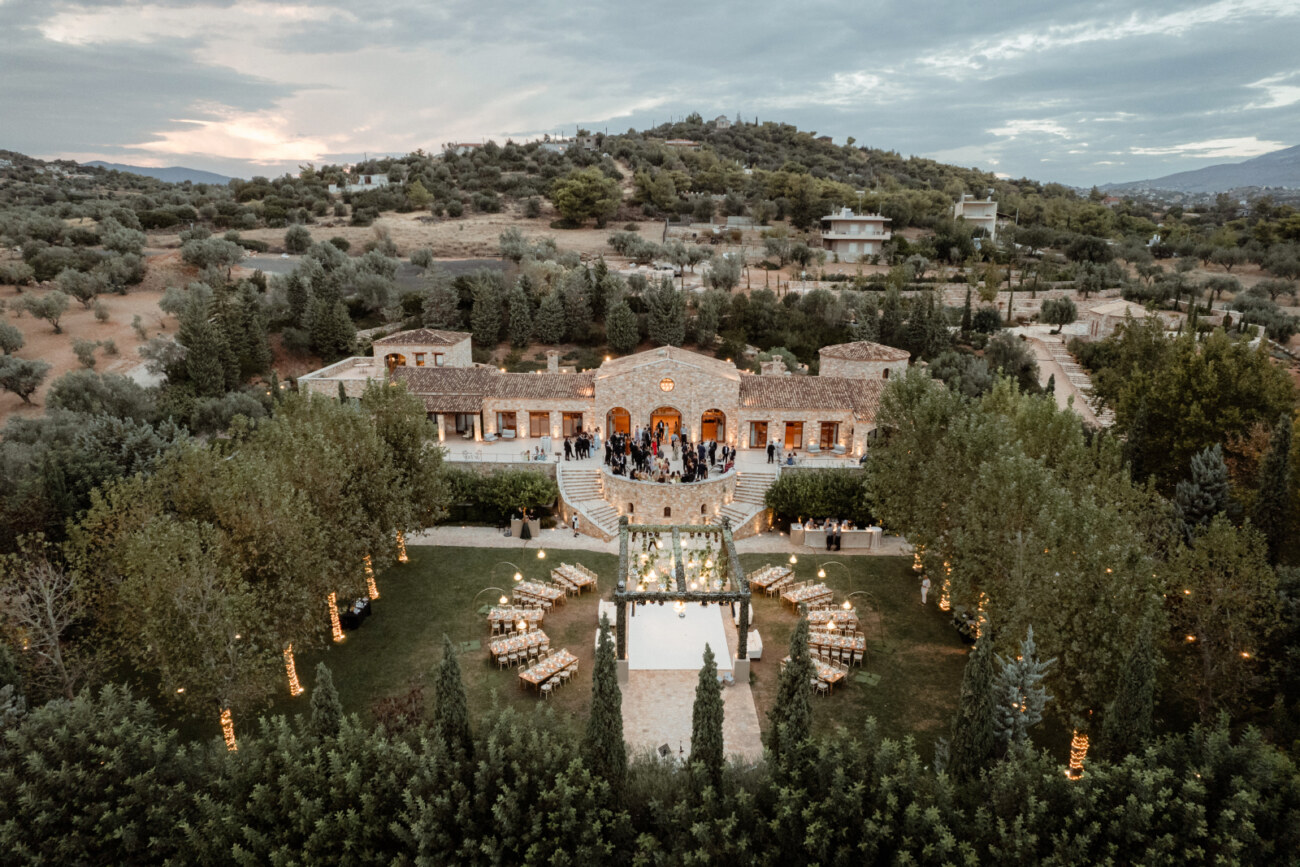
Why Europe Does Not Have One Wedding Budget
Europe is not one wedding market. A wedding in Crete does not carry the same budget logic as a wedding in Santorini. Tuscany does not cost the same as Lake Como. Provence, Paris, Portugal, Mallorca, the French Riviera, and the Amalfi Coast all bring different venue structures, vendor markets, travel logistics, and expectations.
This is why two couples can both say they are planning a destination wedding in Europe and receive completely different budgets.
A more flexible region may allow a couple to create a generous, elegant celebration with less pressure on venue hire, transport, and production. A high-demand location will require more from the budget before design or guest experience has even begun. Some venues include furniture, catering, bar, and staffing. Others provide a beautiful setting, but require almost everything to be brought in.
The country matters, but the exact location matters more. The venue matters even more. And after that, the structure of the wedding often changes everything.
A one-day celebration is very different from a weekend that includes a welcome dinner, wedding day, boat tour, and farewell brunch. Destination weddings in Europe often become multi-day experiences rather than single events, and this is where the budget begins to expand.
How Much Does a Destination Wedding in Europe Cost by Guest Count?
The following ranges are broad orientation figures, not quotes. They are meant to help you understand the relationship between scale, location, and experience.
| Wedding type | Guest count | Realistic budget range |
|---|---|---|
| Elopement or micro wedding | 2–20 guests | €5,000–€25,000+ |
| Simple intimate wedding | 20–40 guests | €25,000–€50,000+ |
| Refined intimate destination wedding | 30–60 guests | €60,000–€120,000+ |
| Premium destination wedding | 50–90 guests | €120,000–€200,000+ |
| Large or high-production multi-day wedding | 80–120+ guests | €180,000–€300,000+ |
These ranges are not defined by guest count alone. A 50-guest wedding in Lake Como, Santorini, Paris, the Amalfi Coast, or the French Riviera can cost more than a larger wedding in a more accessible region.
Guest count is important, especially for food, bar, rentals, transport, and staffing. But it does not control every part of the budget. Creative services, venue exclusivity, planning, production, travel, and the number of events do not automatically become inexpensive because the guest list is smaller.
A smaller wedding can be more intimate, more personal, and sometimes more efficient. It is not always proportionally cheaper.
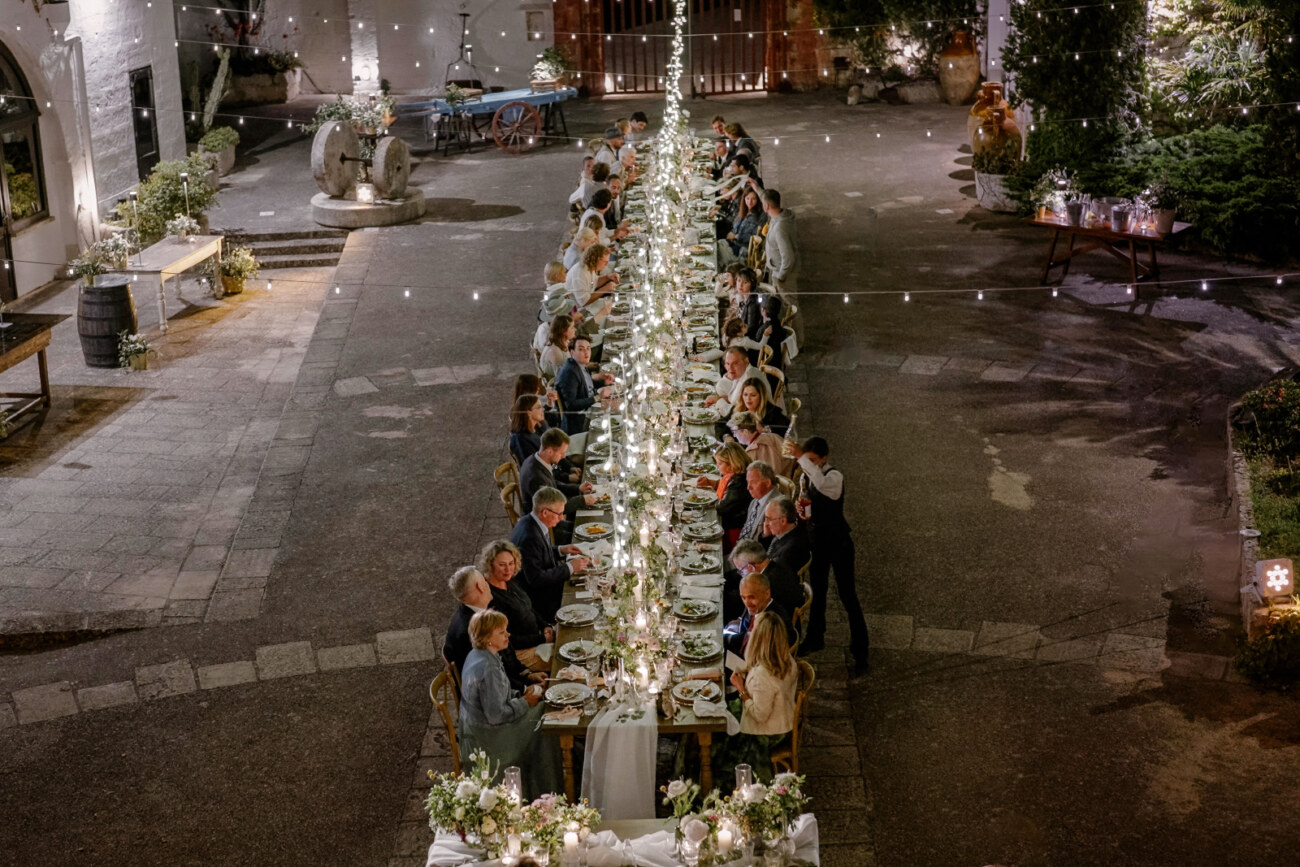
A Practical Budget Allocation for Destination Weddings in Europe
Percentages can be useful, but they should be read as orientation rather than fixed rules. Every wedding shifts depending on location, guest count, venue structure, and the couple’s priorities.
| Category | Practical Budget Allocation |
|---|---|
| Venue or location fee | 8–15% |
| Catering and bar | 30–40% |
| Wedding planner / coordination | 8–15% |
| Photography | 5–8% |
| Videography / wedding film | 5–8% |
| Hair and makeup/beauty | 1–3% |
| Florals and event design | 8–15% |
| Rentals, lighting, sound, production | 8–18% |
| Ceremony officiant / celebrant | 0-2% |
| Ceremony music | 1–3% |
| DJ, band, or party entertainment | 4–8% |
| Transport and guest logistics | 2–5% |
| Stationery, signage, printed details | 1–3% |
| Contingency | 5–10% |
For larger weddings, percentages can help you orient the budget. For smaller weddings, read them with care. A 35-guest wedding still requires planning, travel, equipment, professional creative work, and post-production if the couple wants the day documented properly. This is especially true for creative coverage. A smaller guest list may reduce catering, bar, or rental costs, but photography and videography do not scale down in the same way.
The best way to understand the budget, however, is not only through percentages. It is through examples.
Three Real-Life Budget Examples for Destination Weddings in Europe
The examples below are rounded for clarity. They are not fixed prices or promises of what a similar wedding will cost in the future. Venue fees, supplier rates, travel costs, VAT, availability, exchange rates, and expectations can change from year to year.
They are included to show how different wedding structures affect the final number.
An Intimate Wedding in Santorini for 35 Guests
Indicative budget: €50,000
Scope: wedding day only
Not included: flights, guest accommodation, wedding attire, honeymoon, and welcome party
Santorini is a good example of why a smaller guest count does not always mean a low budget. With around 35 guests, the wedding is intimate, but the destination is still highly requested, visually iconic, and logistically specific.
| Category | Investment |
|---|---|
| Venue / drinks package | €8,700 |
| Catering | €6,400 |
| Wedding planner / coordination | €4,000 |
| Photography | €3,800 |
| Videography / wedding film | €3,800 |
| Florals | €4,200 |
| Furniture and décor | €6,800 |
| Lighting and sound | €2,500 |
| DJ / party music | €1,300 |
| Saxophonist or live music moment | €1,500 |
| Hair and makeup | €1,800 |
| Content creator | €900 |
| Guest transport | €700 |
| Ceremony paperwork, extras, and contingency | €3,400 |
| Approximate Total Budget | €50,000 |
This kind of budget is not shaped only by the number of guests. The venue, food, photography, videography, florals, furniture, music, lighting, transport, and planning still require serious investment.
A smaller Santorini wedding can feel intimate and personal, but it is not automatically inexpensive. The setting carries its own costs, especially when the couple wants the day to feel designed, hosted, and properly documented.
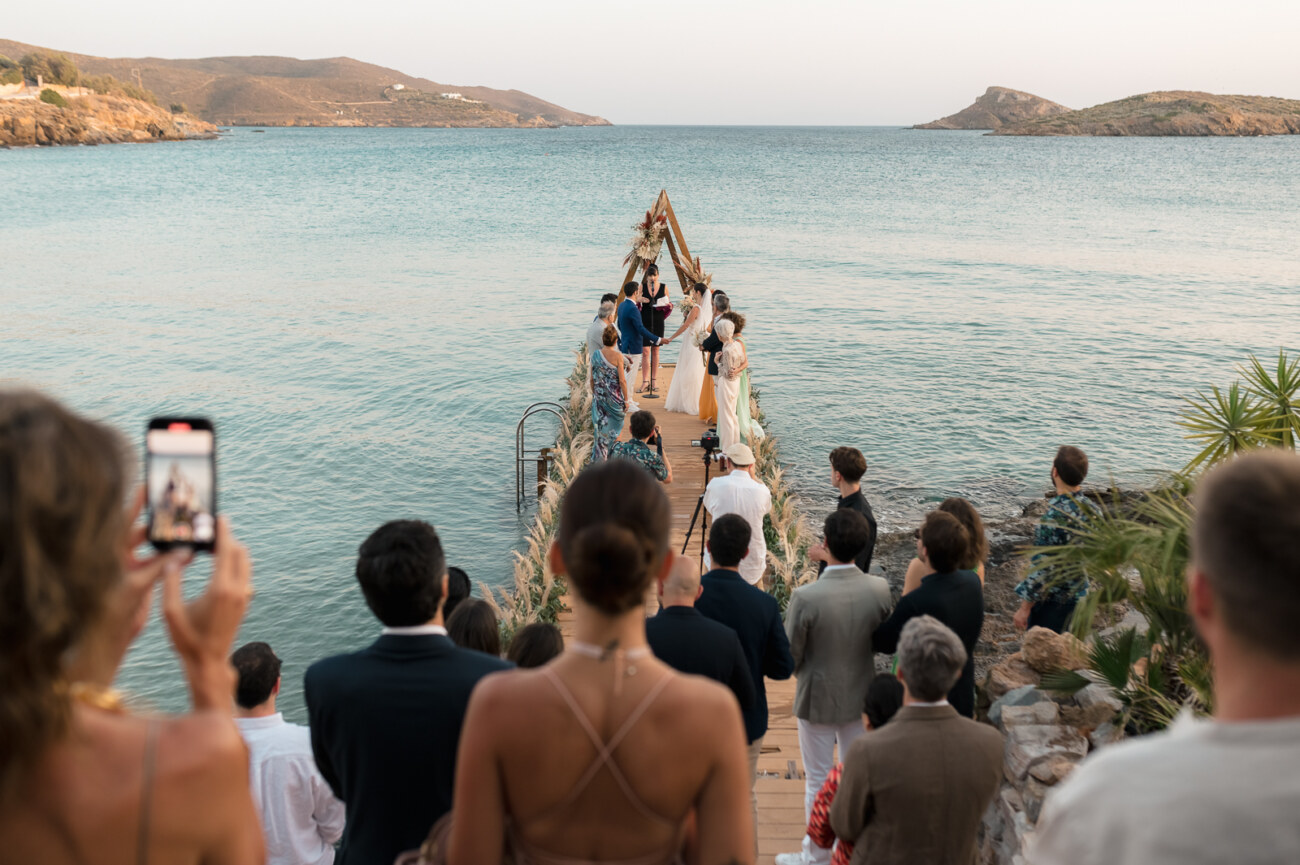
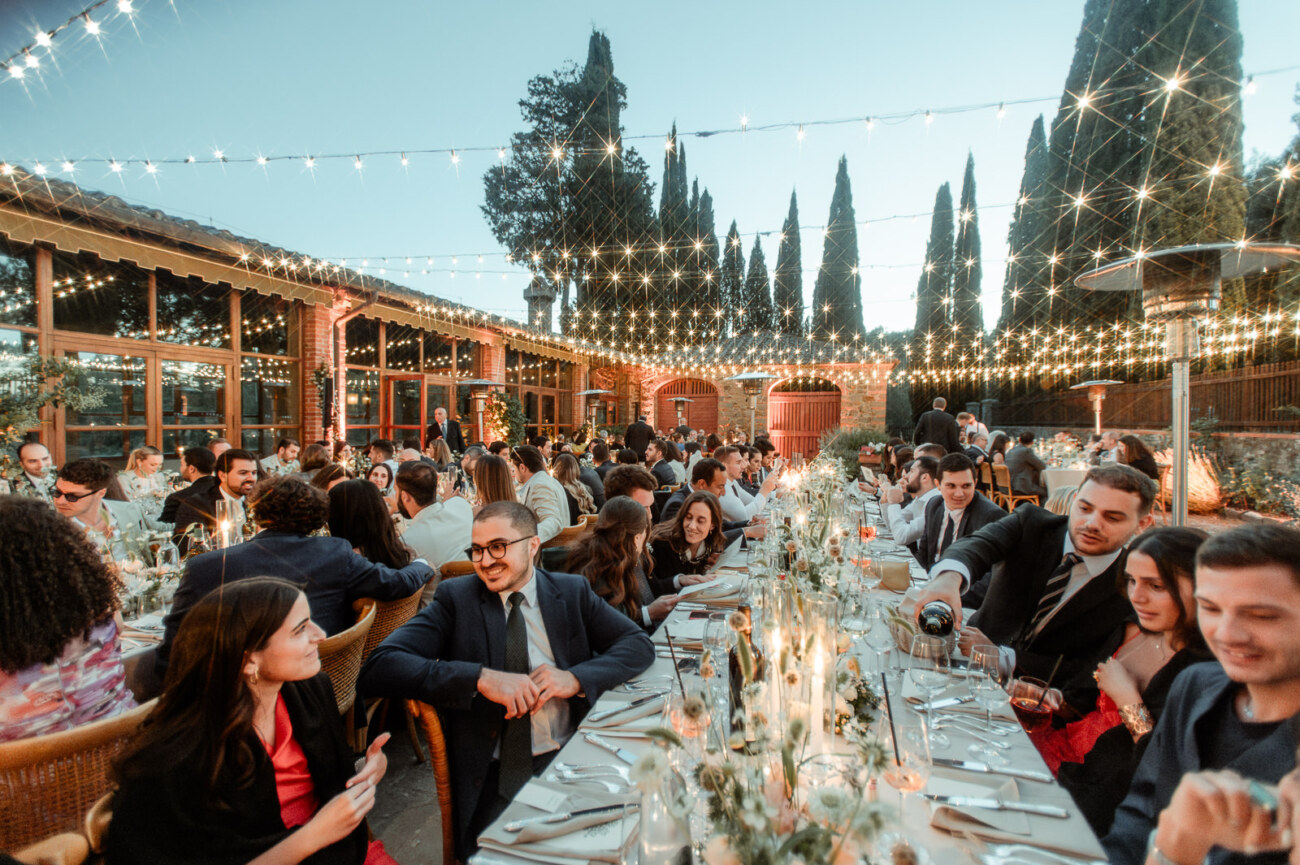
A Refined 60-Guest Wedding in Tuscany
Indicative budget: €90,000
Scope: wedding day plus welcome pizza party or informal dinner
Not included: flights, guest accommodation, wedding attire, rings, honeymoon, and personal travel
Tuscany has a wide range. A simpler countryside wedding may begin around €30,000–€40,000, especially with fewer guests, limited production, and one main event. A more refined celebration with 60 guests, a welcome gathering, professional creative teams, design, music, and a complete guest experience will usually need a stronger budget. For this kind of Tuscany celebration, guests often arrive the day before and gather for a relaxed pizza party or informal dinner at or near the same countryside estate.
| Category | Investment |
|---|---|
| Venue / estate fee | €10,000 |
| Welcome pizza party or informal dinner with drinks | €5,000 |
| Wedding-day catering and open bar | €22,000 |
| Wedding planner / coordination | €9,000 |
| Photography | €6,500 |
| Videography / wedding film | €6,500 |
| Hair and makeup / beauty | €2,000 |
| Florals and event design | €9,000 |
| Rentals, lighting, sound | €8,000 |
| Ceremony strings or live ceremony music | €1,500 |
| DJ / party music | €2,000 |
| Stationery, signage, printed details | €1,500 |
| Transport and guest logistics | €2,000 |
| Extras and contingency | €5,000 |
| Approximate Total Budget | €90,000 |
This kind of Tuscany wedding is not unlimited luxury. It is a complete, refined destination wedding. The budget supports a welcome gathering, good food and wine, professional photography and videography, design, music, and the infrastructure needed to make the experience feel generous without becoming excessive.
Accommodation is a separate question. At some Tuscan venues, a villa or estate buyout fee may include rooms for the couple, family, or a portion of the guest list. In other cases, guest accommodation is booked and paid separately. This should always be clarified before comparing budgets, because accommodation can dramatically change the final number.
A 100-Guest Wedding Weekend in the South of France
Indicative budget: €200,000
Scope: rehearsal dinner, welcome beach party, and wedding day
Not included: guest flights, guest hotels, wedding attire, honeymoon, and most personal travel
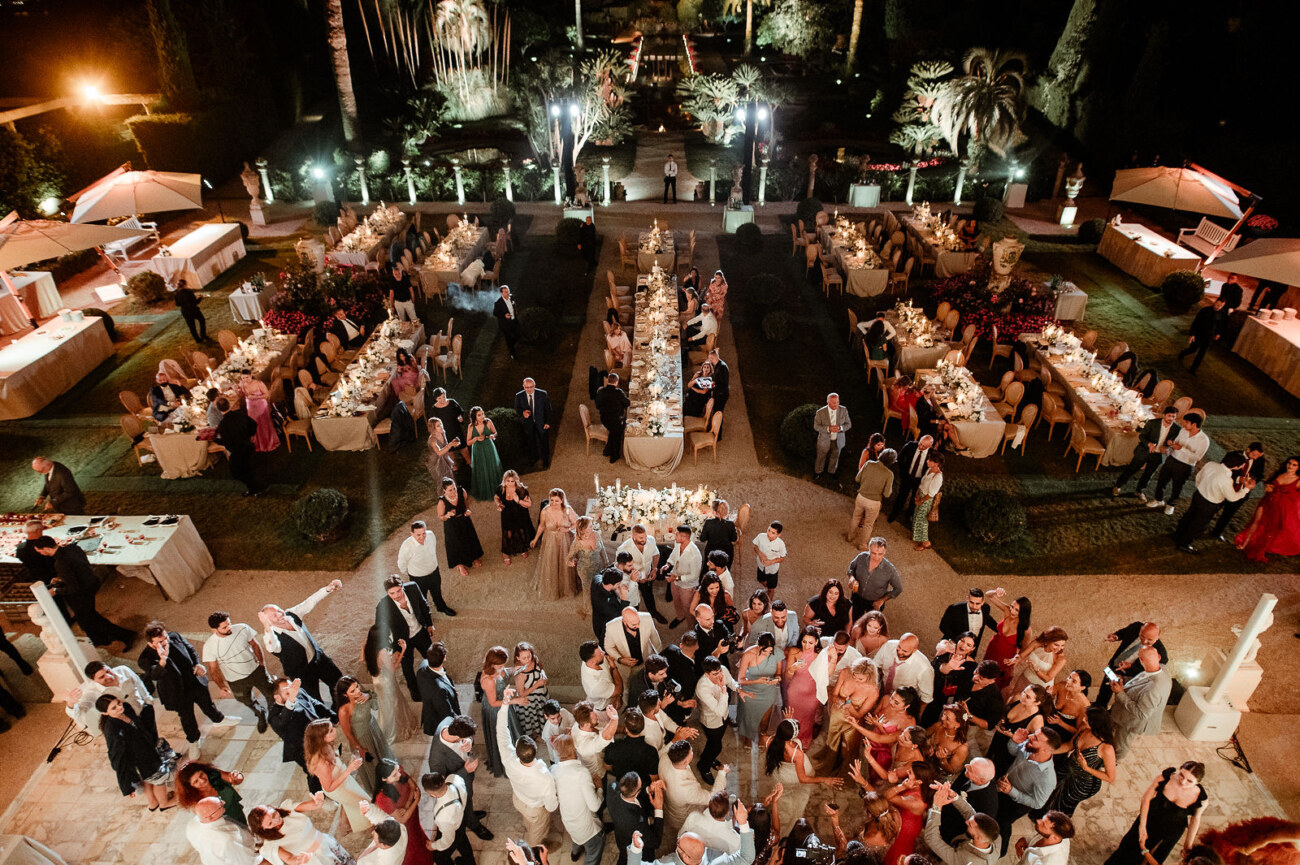
A 100-guest wedding in the South of France or the French Riviera sits in a different category. The budget is shaped not only by the guest count, but by the weekend structure: family dinner, welcome party, full wedding day, premium food and bar, music, lighting, production, transport, and a larger team.
| Category | Investment |
|---|---|
| Rehearsal dinner / family dinner | €5,000 |
| Welcome beach party | €25,000 |
| Wedding venue | €16,000 |
| Wedding planner / coordination | €12,000 |
| Catering and open bar | €56,000 |
| Florals | €15,000 |
| Photography | €10,000 |
| Videography / wedding film | €10,000 |
| Content creator | €2,000 |
| Rentals, lighting, sound, production | €28,000 |
| Stationery, branding, printed details | €3,000 |
| Ceremony strings | €1,500 |
| Live music during cocktail / dinner | €7,000 |
| DJ and sax / party entertainment | €4,000 |
| Hair and makeup | €1,500 |
| Guest shuttles | €3,000 |
| Custom extras, guest details, contingency | €3,500 |
| Approximate Total Budget | €200,000 |
This example shows how quickly a destination wedding grows when it becomes a full weekend. The wedding day itself may already carry major costs, but the welcome party, transport, music, production, planning team, and guest experience add another layer.
It also shows why 100 guests is not just a larger version of a 50-guest wedding. More guests can require more food, more bar, more service staff, more transport, more rentals, more space, and more coordination. In a premium destination, those increases become significant.
The same destination can also support very different budgets. One South of France wedding may keep the design restrained and invest more in food, music, and documentation. Another may place more emphasis on florals, custom production, entertainment, and a larger creative team.
Seen together, these examples explain why online budget averages can be confusing. One article may describe a simple intimate wedding. Another may describe a luxury weekend. Another may exclude photography, videography, tax, transport, accommodation, or welcome events. Without knowing what is included, the numbers are difficult to compare.
How Your Location in Europe Affects the Budget
Location does not only affect the look of the wedding. It affects access, vendor availability, accommodation, transport, venue restrictions, weather backup, and production.
In Greece, Santorini and Mykonos usually require different budgets than Crete, Athens, or quieter islands. Santorini has iconic views, but also limited space, strong demand, and logistical pressure. Crete can offer more variety, larger venues, and sometimes more flexibility. Athens and the Athenian Riviera can be easier for guest access, while still offering strong event infrastructure.
In Italy, Tuscany, Lake Como, the Amalfi Coast, Puglia, Rome, and Sicily all support different kinds of weddings. Tuscany and Umbria often work beautifully for estate-based, multi-day celebrations. Lake Como and the Amalfi Coast are more premium and often more logistically complex. Puglia may offer a slower rhythm and strong atmosphere, but venue structure and travel still matter.
In France, a countryside wedding in Provence may lead to a very different kind of budget from a Paris wedding or a French Riviera château. In Portugal and parts of Spain, couples may find better value, but high-quality planning, food, photography, videography, music, and design still require a serious investment.
You do not choose your wedding destination only for its beauty. It deeply characterises the overall experience you are creating and affects the budget needed to support it.
The Destination Wedding Costs Couples Most Often Underestimate in Europe
Some wedding costs are obvious. Others become clear only after planning begins.
Welcome events are one of the most common examples. A welcome dinner, pizza party, or beach gathering may feel relaxed, but it still involves food, drinks, staffing, music, transport, furniture, and sometimes a venue fee.
Day-after brunches, boat tours, pool parties, or informal guest experiences can also add significantly to the final budget. These events are often worth it because they give the destination wedding its sense of time and togetherness, but they should be considered early.
Venue buyouts can also change the budget. In Italy, France, and private villa settings, couples may need exclusive use, minimum nights, accommodation commitments, or a full production setup. A beautiful venue does not always include tables, chairs, lighting, sound, bar infrastructure, staff areas, or weather backup.
Transport is another category that is easy to underestimate. On islands, coastal roads, hilltop towns, private villas, or remote estates, guest shuttles may be essential. They affect both comfort and timeline.
Lighting and sound also deserve attention. They are not only for the party. Good lighting can transform the dinner atmosphere. Proper sound ensures guests hear the ceremony, speeches, music, and emotional moments clearly.
A strong budget should also leave space for contingency. Overtime, weather adjustments, extra transfers, currency changes, VAT, service fees, and last-minute production needs can all affect the final number.
What Is Often Not Included in Budget Breakdowns
When comparing destination wedding budgets online, always check what is included.
Some budgets refer only to the wedding day. Others include a full weekend. Some include attire and rings, while others exclude them completely. Some include tax and service fees. Others do not.
Often, the following are treated separately:
- wedding dress and attire
- rings
- flights
- accommodation
- honeymoon
- guest accommodation, unless hosted by the couple
- legal paperwork, translations, church, or celebrant fees, depending on the ceremony structure
- beauty trials
- welcome gifts
- shipping or extra baggage for décor
- currency conversion and bank fees
- fireworks or highly optional entertainment elements
This is why two wedding budgets can look similar on paper while describing completely different experiences.
Fireworks, for example, can be a beautiful addition when legally permitted, but they should be treated as an optional experience cost rather than a core planning category. The same applies to custom merchandise, extensive welcome gifts, extra performances, or highly produced after-parties.
Photography and Videography: How Much to Budget and Why It Matters
Photography and videography should have separate space in the budget.
They may come from the same studio or from different creative teams, but they should not automatically be treated as one category where video receives whatever is left after photography. If both matter to you, both deserve proper consideration.
For refined destination weddings, photography may often represent around 5–8% of the overall budget, and videography may sit in a similar range. These percentages are only a ballpark. Some highly sought-after photographers or videographers may represent a higher percentage of the budget, especially when the couple values a specific artistic approach, multi-day coverage, or a more involved creative process.
For smaller weddings, percentages can also be misleading because creative services do not reduce dramatically with the number of guests.
A wedding film is not priced only according to the guest count. The work includes preparation, travel, filming, sound recording, editing, color, music selection, storytelling, delivery, and often communication across different countries and time zones. A 35-guest wedding still deserves the same level of care if the couple wants the day preserved properly.
For couples who value sound, vows, speeches, movement, atmosphere, and the emotional rhythm of the weekend, videography should be protected early in the budget rather than added at the end.
Content Creators
A content creator can be a useful addition for couples who want immediate vertical clips, behind-the-scenes moments, and social content from the wedding weekend. It should not replace videography.
The purpose is different. A content creator focuses on fast, informal content, usually delivered quickly. A wedding filmmaker is responsible for preserving the story, sound, atmosphere, speeches, movement, and emotional rhythm of the day through a crafted film.
For that reason, content creation is best treated as an optional add-on after photography and videography have been properly considered.
Some couples may also choose to add analogue formats such as Super 8 film. Like content creation, this should be treated as an additional creative layer rather than a replacement for professional photography or videography.
For a clearer sense of how videography collections are usually structured, you can visit the wedding videography investment page.
Planner Fees, Vendor Recommendations, and Budget Transparency
A wedding planner can be one of the most valuable investments in a destination wedding, especially when the celebration involves several days, guest transport, local rules, venue restrictions, and an international vendor team. Since the planner also plays a central role in shaping and managing the budget, it is worth understanding how their own fee is structured. Some planners work with a fixed planning fee. Others work with a percentage of the overall wedding budget, or with a different structure depending on the scope of the celebration.
The same clarity is useful when vendors are recommended or booked through the planner. In some cases, the couple books photography, videography, florals, music, or production directly. In others, the planner introduces or manages the booking process. What matters is understanding whether the quote reflects the vendor’s own collection, whether any management or planning fee is included, and whether recommendations are based on style, trust, availability, quality, and fit.
This does not need to become a suspicious conversation. It is simply part of building a clear budget. A strong planner should protect the integrity of the wedding as much as its beauty.
How to Allocate the Budget for Your Destination Wedding in Europe More Intentionally
A good destination wedding budget allocation begins with understanding which parts of the celebration will define the experience most. For many couples, the strongest investments are often food, drink, music, planning, photography, videography, and guest comfort: the parts people feel most directly and the ones that remain most vividly in memory.
Reducing the guest count can sometimes be more effective than reducing the quality of every vendor. A smaller wedding with excellent food, thoughtful pacing, strong music, and meaningful documentation will often feel more generous than a larger wedding where every category has been stretched thin.
Choose a venue with atmosphere, but also understand what it requires. A beautiful place that needs extensive rentals, lighting, transport, and staffing may become more expensive than expected. A venue with strong infrastructure may allow more of the budget to go toward experience and creative priorities.
Above all, decide what matters before the budget is fully distributed. If the film matters, protect the videography budget early. If guest experience matters, do not underfund food, bar, transport, or timing. If atmosphere matters, leave room for lighting, music, and design.
A clear budget helps the celebration feel more intentional, whatever its size.
Frequently Asked Questions About Destination Wedding Costs in Europe
What is a realistic budget for a destination wedding in Europe?
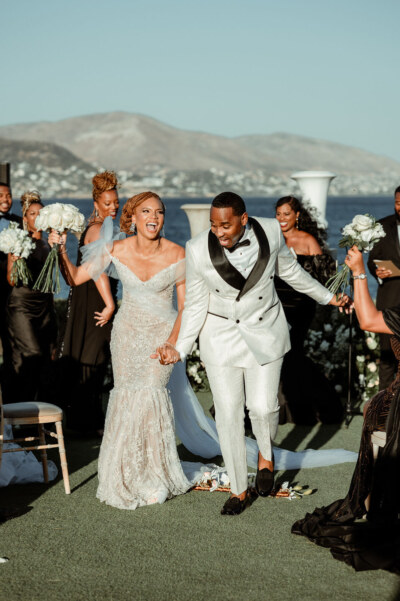
A destination wedding in Europe can cost anywhere from €30,000 to €300,000+, depending on guest count, location, venue, number of events, and production level. A refined 50-guest wedding often sits around €60,000 to €120,000, while premium or multi-day celebrations can move much higher.
How much does a 50-guest destination wedding in Europe cost?
For a refined 50-guest destination wedding, a realistic working budget is often between €60,000 and €120,000. In high-demand destinations such as Lake Como, Santorini, Paris, the Amalfi Coast, or the French Riviera, the same guest count can move into a higher range.
How much does a destination wedding in Greece cost?
For 30–50 guests in a premium island setting such as Santorini or Mykonos, a realistic budget often sits between €50,000 and €100,000. In more accessible destinations such as the Athens Riviera, Crete, or quieter islands, costs can be lower. The Santorini example in this guide shows how a 35-guest wedding can sit around €50,000 without being a luxury production.
How much does a destination wedding in Italy cost?
For a refined 60-guest wedding at a Tuscany estate or countryside villa, a realistic working budget including a welcome event often sits around €80,000–€100,000. Premium destinations such as Lake Como or the Amalfi Coast will typically move higher for the same guest count, while regions such as Puglia may offer more flexibility.
Is Greece cheaper than Italy for a destination wedding?
Sometimes, but not always. Greece can offer more flexibility in places such as Crete, Athens, or quieter islands, while Santorini and Mykonos can be premium markets. Italy also varies widely. Puglia or parts of Sicily may offer more flexibility than Lake Como, Tuscany, or the Amalfi Coast.
Why do destination wedding budgets online look so different?
Because they often include different things. One budget may include only the wedding day, while another includes a full weekend. Some include photography and videography; others do not. Some exclude attire, flights, hotels, taxes, service fees, welcome events, transport, and production. Budgets are useful only when the scope is clear.
How much should we budget for wedding videography?
For refined destination weddings, videography often represents around 5–8% of the overall budget, sometimes more for smaller weddings where the couple places a high value on film. This is only a ballpark. Sought-after wedding filmmakers may sit above that range depending on artistic approach, coverage, location, team size, travel, and post-production.
Does a content creator replace a wedding videographer?
No. A content creator can be a useful add-on for immediate social content, short vertical clips, and behind-the-scenes moments. Videography has a different purpose: preserving the story, sound, atmosphere, movement, and emotional rhythm of the wedding through a crafted film.
What costs do couples underestimate most?
Couples often underestimate welcome events, guest transport, lighting, sound, rentals, venue buyouts, vendor travel, VAT, service fees, overtime, weather backup, and contingency. These details may not be as visible as florals or the venue, but they can strongly affect both the budget and the experience.
Is a destination wedding in Europe cheaper than a wedding at home?
It can be, especially with a smaller guest list or a more accessible destination. But it is not automatically cheaper. A destination wedding often includes extra logistics, travel, guest events, local coordination, and production needs. The final cost depends on the kind of experience you want to create.
Final Thoughts
A destination wedding in Europe takes its shape from many decisions at once: the guest count, the location, the venue, the number of events, and the priorities behind the celebration.
A simple intimate wedding, a refined 50-guest gathering, and a three-day celebration in a premium destination may all fall under the same broad phrase, but they ask for very different budgets because they create very different experiences.
The question “How much does a destination wedding in Europe cost?” becomes more useful when it is connected to the celebration itself: where it should unfold, who you want to gather, how long the experience should last, and which parts of it you want to protect most.
When those answers are clear, the budget becomes less abstract. It becomes a way of protecting the atmosphere, memory, and meaning of the wedding you are actually planning.
For couples planning a destination wedding with a strong focus on atmosphere, story, and memory, Cinema of Poetry creates wedding films across Greece, Italy, and Europe with a thoughtful, cinematic approach. You can explore more about my work as a Europe Wedding Videographer or get in touch to share more about your plans.
Get in touch
If you are planning a wedding in Greece, Italy, or elsewhere in Europe and want the day documented with atmosphere, story, and intention, I would be happy to hear more about your plans.