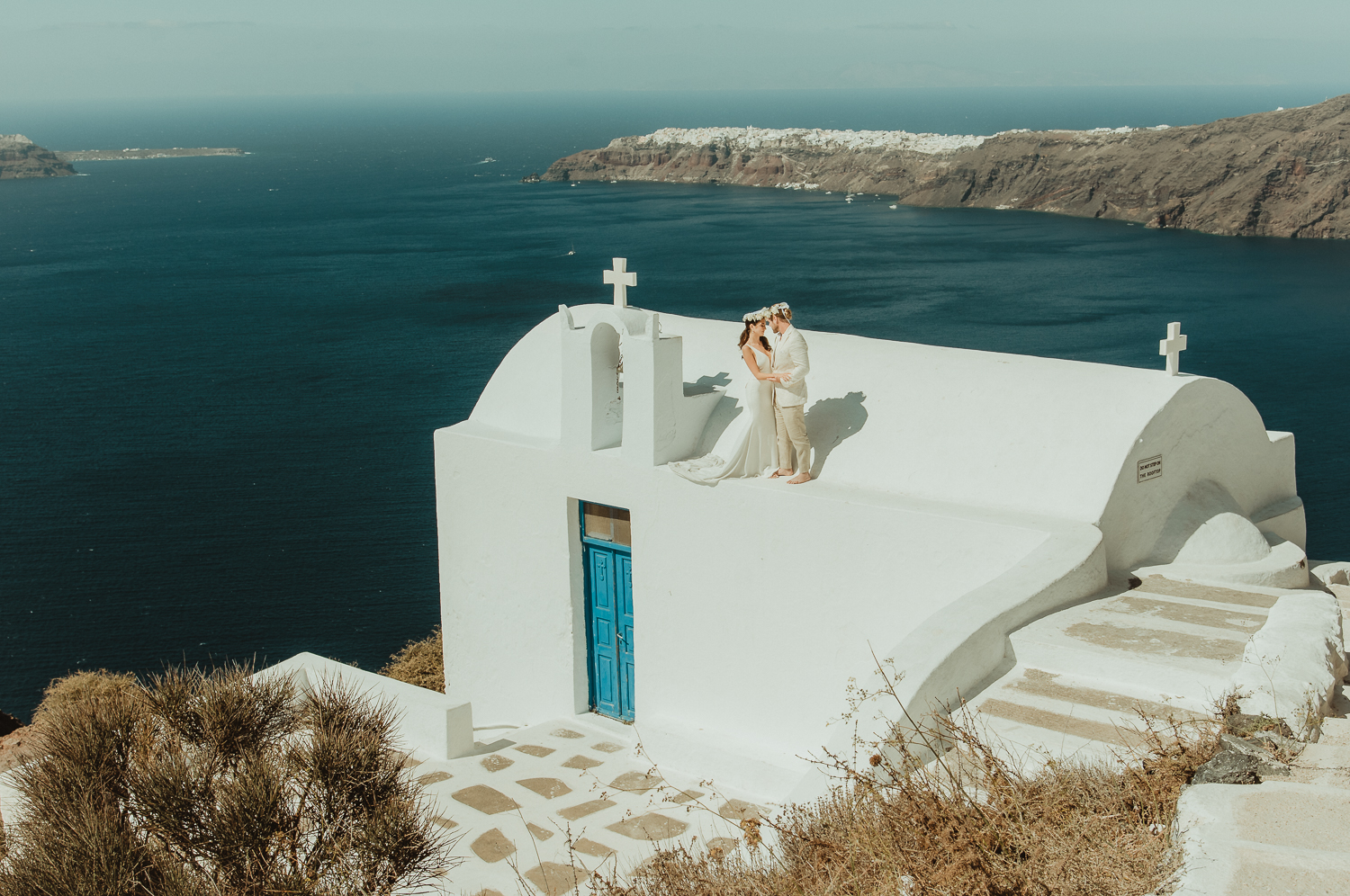
Planning a destination wedding in Greece means making a series of decisions that shape not only the setting, but the rhythm and experience of the celebration itself. A wedding in Athens unfolds very differently from one on Santorini, in Crete, or on a quieter island, not only in atmosphere, but in accessibility, timing, and the overall experience for both the couple and their guests.
For many international couples, that variety is precisely what makes Greece so compelling. The country can feel architectural or elemental, social or intimate, effortless or logistically complex, depending on where and how the wedding is planned.
How to plan a destination wedding in Greece is therefore not only a question of choosing a beautiful place. It begins with defining the kind of experience you want to create, because that choice shapes the right region, the pace of the day, the guest experience, and the team you build around it.
This guide is designed to help you approach that process with more clarity and confidence.
Begin With the Experience You Want to Create
The most useful question to ask before anything else is not where in Greece, or which venue, or even what time of year. It is what kind of experience you want your wedding to be.
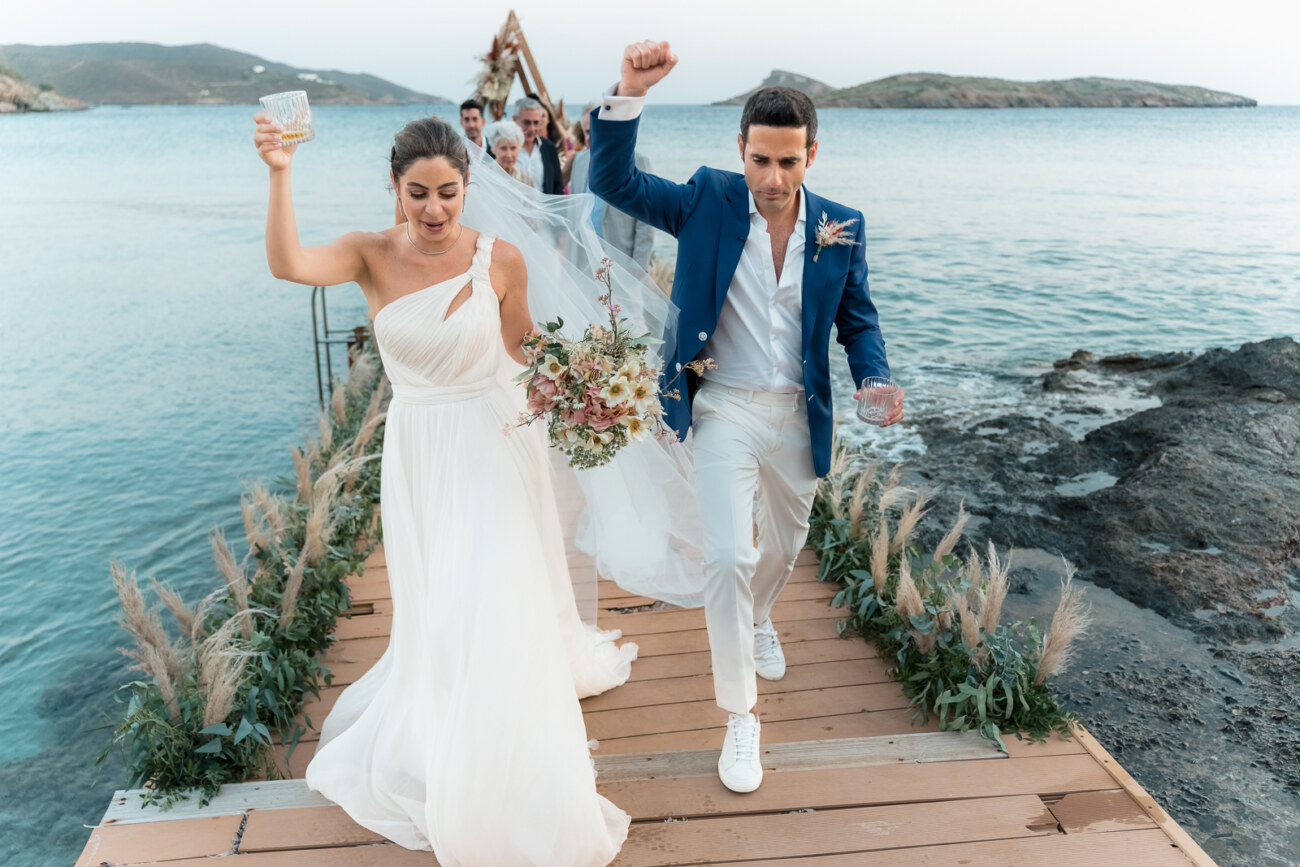
Greece accommodates an exceptional range of celebration styles. A cliffside elopement in Santorini with two witnesses and a sunset ceremony is a Greek wedding. So is a four-day celebration on a private estate in Corfu with one hundred and fifty guests, a welcome dinner, a boat day, and a farewell brunch. So is an intimate gathering on the Athens Riviera, accessible for guests flying in from multiple countries, relaxed and unhurried across two days.
These are not variations of the same event. They require different budgets, different vendor teams, different timelines, and in some cases different islands or regions entirely. Starting with a clear sense of the experience you want to create, its scale, its atmosphere, and its emotional register, makes every later decision far more coherent.
Ask yourselves: how many people do we genuinely want present? Do we want guests to travel and immerse themselves in a place, or do we want something more private and contained? Is the wedding one concentrated day, or do we want to build something that unfolds across several? Is the setting the story, or the backdrop to something more intimate?
The answers to those questions will usually point you toward the right part of Greece before you have looked at a single venue.
Choosing the Right Part of Greece for Your Destination Wedding
One of the first things couples discover when they begin planning a destination wedding in Greece is that the country is not one destination. It is a landscape of very different wedding experiences, and the differences between regions are not simply aesthetic. They are practical, logistical, and atmospheric in ways that matter deeply when you are organising a wedding from abroad.
Athens and the Athens Riviera
Athens is the most accessible destination in Greece for international couples and their guests. Both major airports serve the city directly, which means arrivals from the United States, Europe, and beyond can converge without the ferry transfers or domestic flights that island weddings often require.
The city itself offers a different kind of wedding setting; urban, layered with history, and visually rich in a way that is architectural rather than purely natural. Rooftop venues with views of the Acropolis, neoclassical private estates, and contemporary spaces in repurposed industrial buildings all exist here, often within the same broader environment.
The Athens Riviera extends south along the coastline toward Cape Sounion, offering sea-facing venues, coastal resorts, and a more relaxed pace while remaining within easy reach of the city. For couples who want a Greek-island atmosphere without island logistics, the Riviera is often the most practical and underestimated choice. The season here is also longer than on many islands, with comfortable conditions from April through late October, and the vendor ecosystem is among the strongest in the country.
For couples considering this region, the Athens Wedding Videographer page offers a closer look at the destination and the work created here.

Santorini
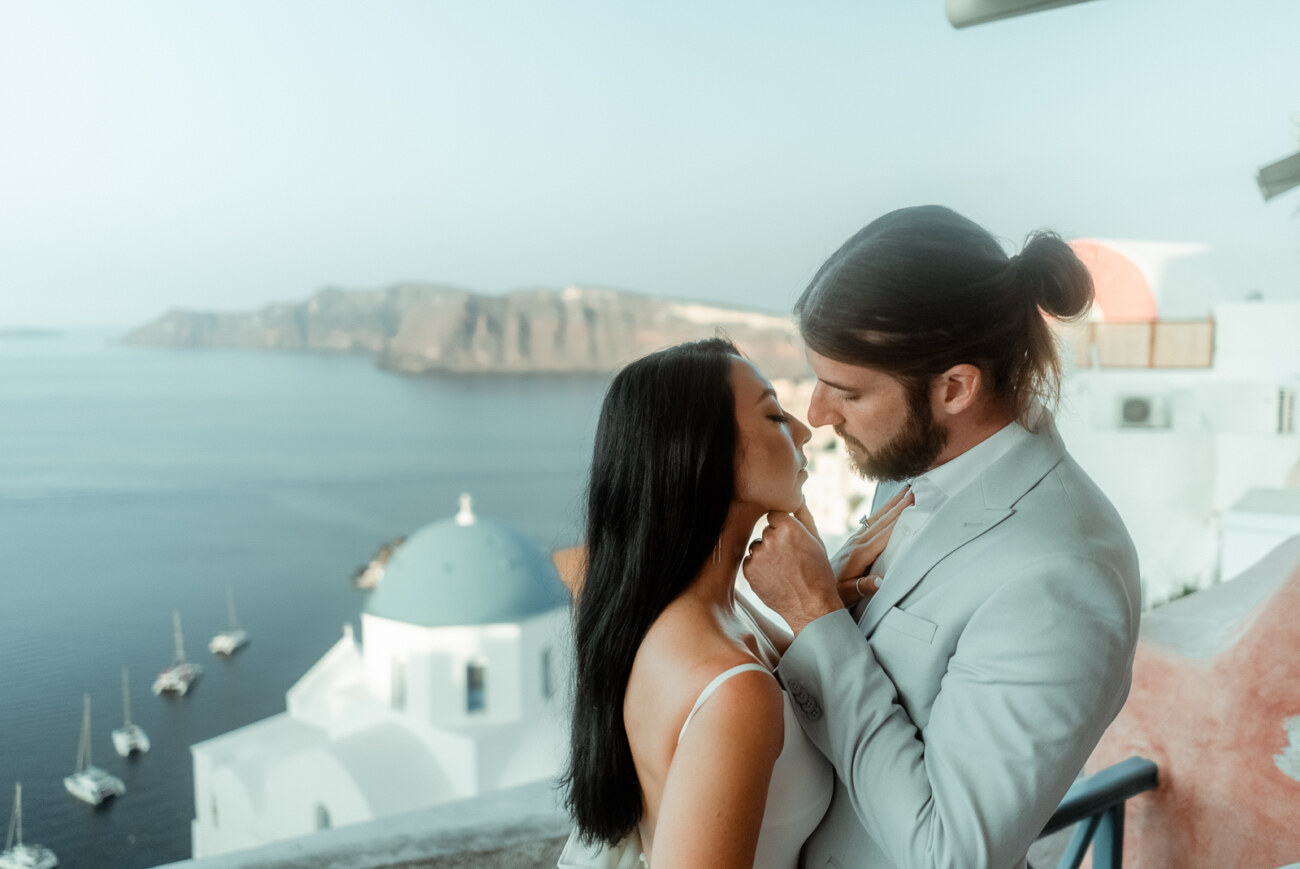
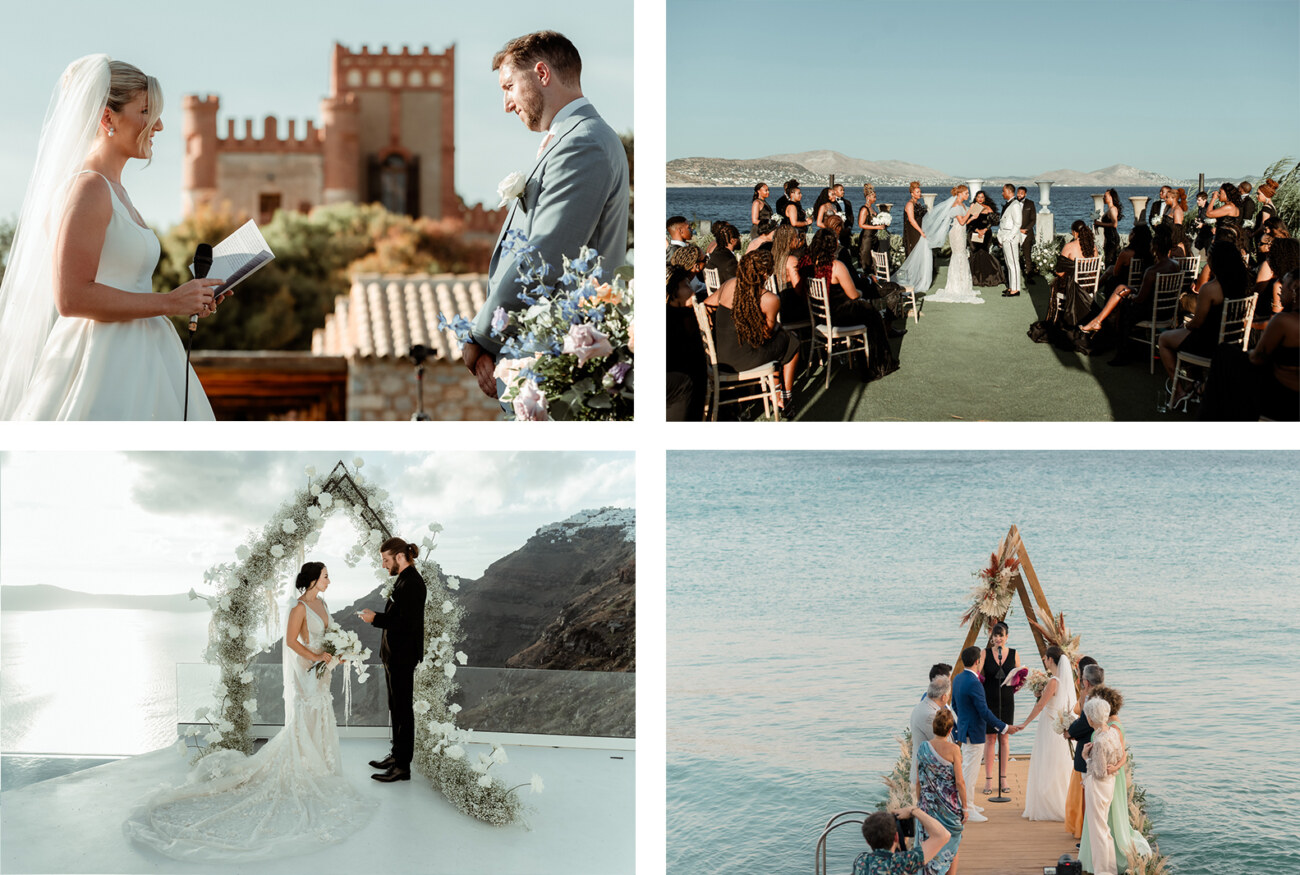
Santorini is the most internationally recognised destination for couples planning a wedding in Greece, and for good reason. The caldera views, the white architecture, and the quality of late afternoon light over the volcanic landscape are genuinely extraordinary conditions for a celebration.
But Santorini also requires honest planning. The island is among the most visited in the Mediterranean during peak season, which means venues book early, vendor availability is tighter, and movement between locations can be more demanding than couples often expect. The cliffside geography that makes Santorini so distinctive also means accessibility, for older guests or those with mobility considerations, is worth thinking about early.
Santorini rewards couples who plan ahead, choose their team carefully, and approach the destination with realistic expectations. When those conditions are met, it delivers on its reputation fully. You can explore more about filming and celebrating here on the Santorini Wedding Videographer page.
If you are considering this destination more seriously, you may also explore the Best Wedding Venues in Santorini guide.
Mykonos
Mykonos occupies a different register from Santorini. Where Santorini tends to feel ceremonial and contemplative, Mykonos is design-forward, cosmopolitan, and social. The island has a strong contemporary identity, and its wedding venues often reflect that, with an emphasis on movement, atmosphere, and celebrations that extend well beyond the ceremony itself.
Couples drawn to Mykonos are usually looking for a wedding with energy and a distinctly social quality, where the island itself becomes part of the guest experience. It suits larger celebrations with an international guest list comfortable with the island’s particular character and pace. Costs here are among the highest in Greece, reflecting both demand and the island’s general price level.
The Rest of the Cyclades
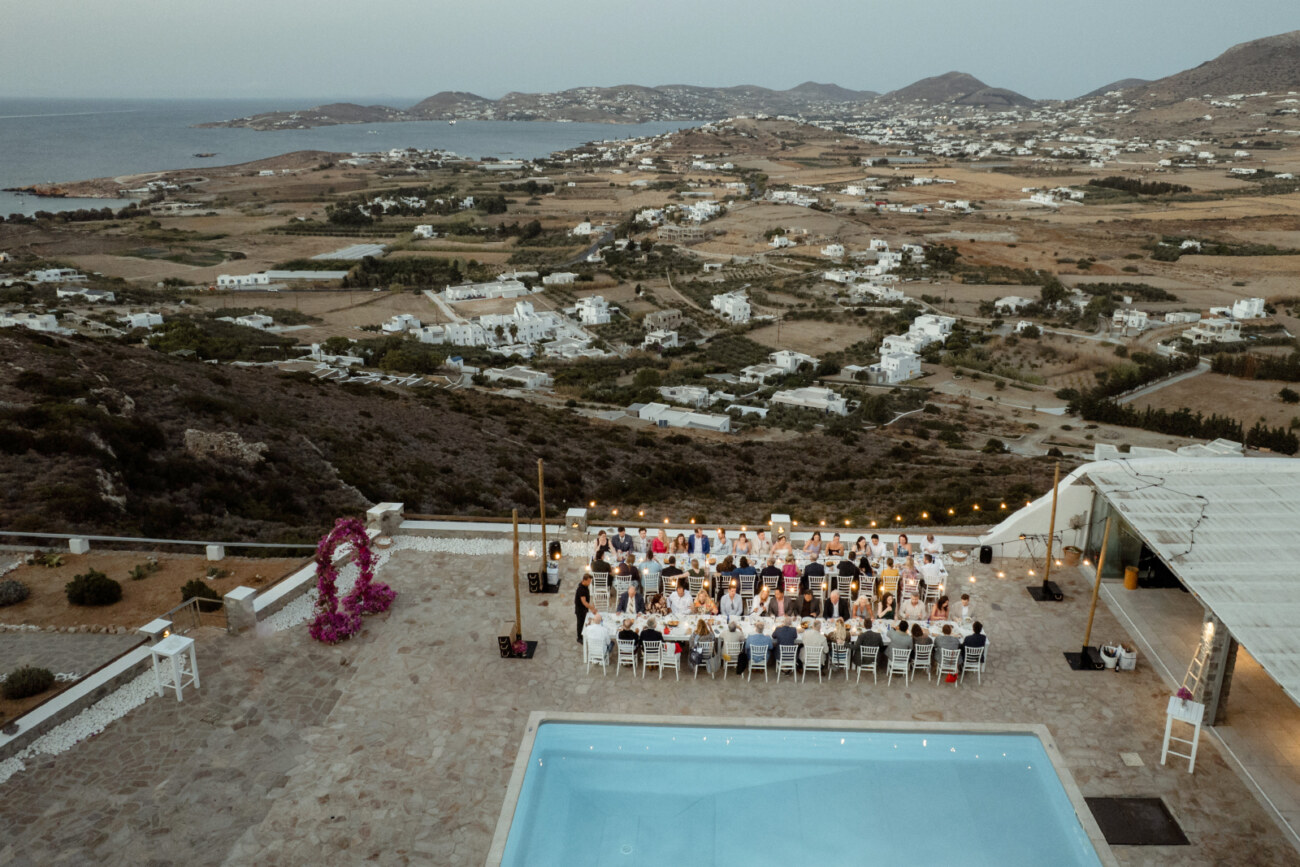
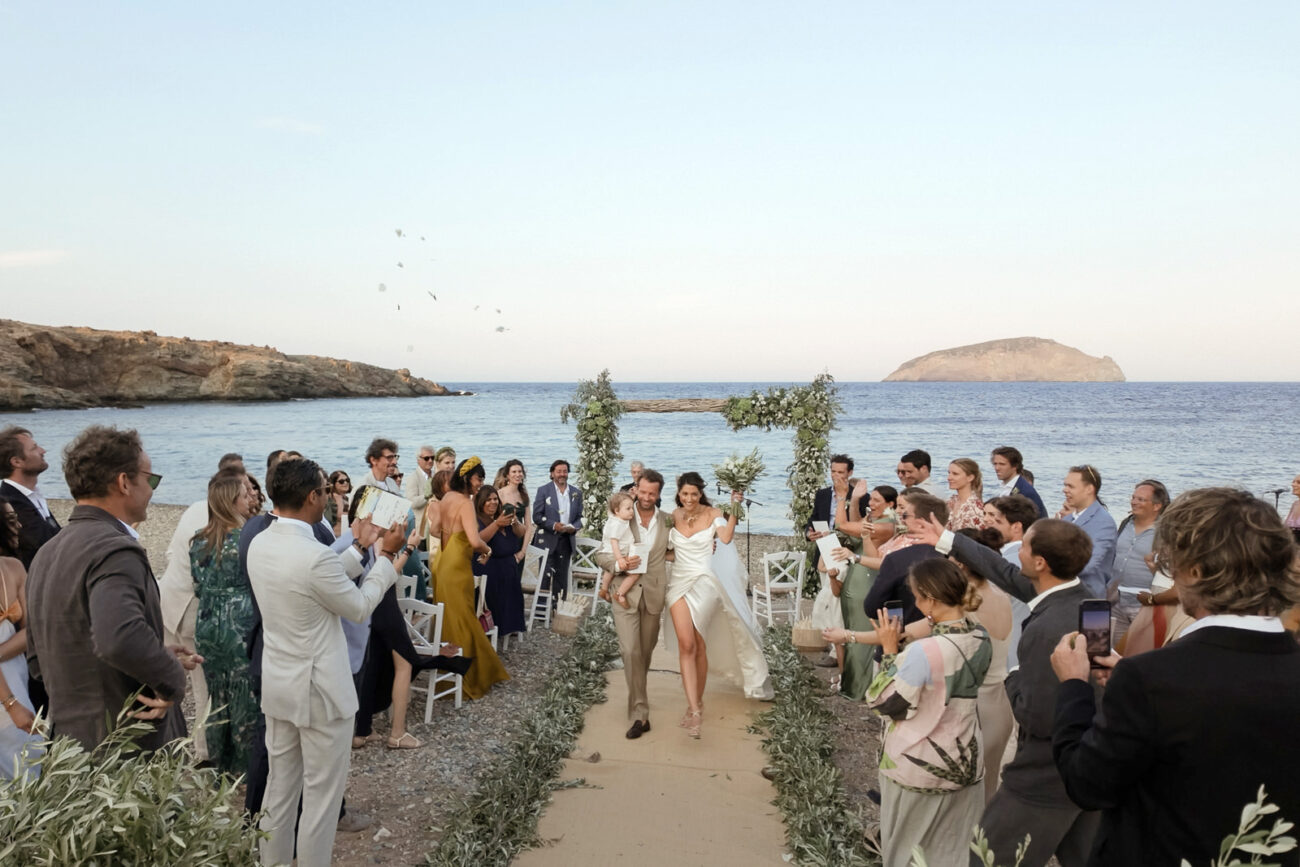
Beyond Santorini and Mykonos, the Cyclades offer a range of settings increasingly chosen by couples who want something less expected. Paros has developed a strong destination wedding infrastructure in recent years, with a mix of traditional architecture and contemporary venues that offer character without the same level of intensity. Naxos is larger, greener, and quieter, with a slower pace that suits couples wanting a more immersive island experience. Milos and Folegandros attract couples drawn to a more cinematic and remote atmosphere, where the landscape itself carries more of the day.
These islands usually require more logistical planning than the major destinations, but for the right couple they offer something that the best-known islands can struggle to preserve, a sense of discovery and ease.
Crete and the Larger Islands
Crete is the largest Greek island and one of the most geographically diverse destination wedding settings in the country. The northern coast, with its developed infrastructure and accessible airports in Heraklion and Chania, suits larger celebrations with international guest lists. The south coast and the island’s interior offer something more rugged and grounded for couples looking for a wedding that feels closer to the texture of real Greek life.
What Crete offers that the smaller Cycladic islands cannot is variety. Coastal resorts, olive grove estates, mountain villages, and historic properties can all exist within the same broader planning framework. Other larger islands, including Rhodes, can offer a similar balance of accessibility and local character.
Corfu and the Ionian Islands
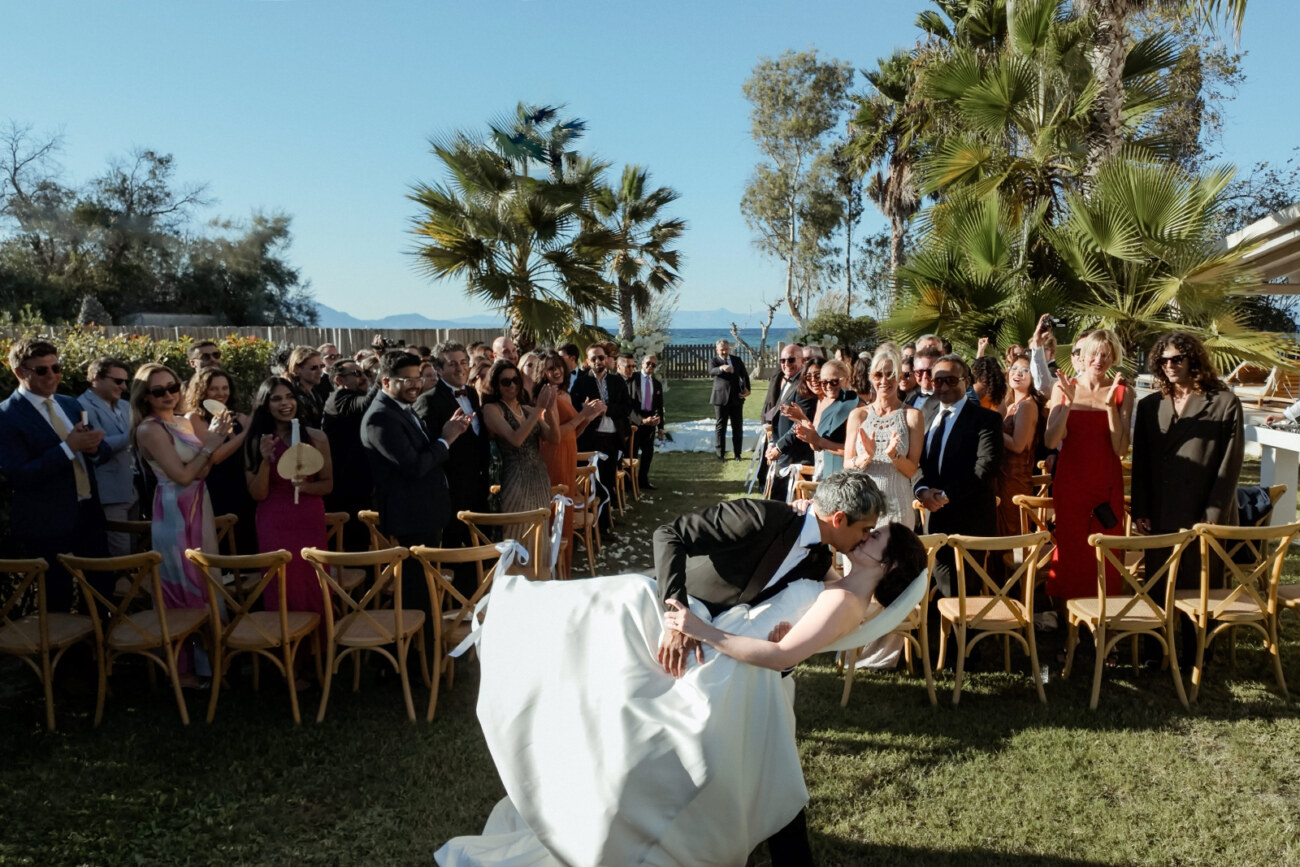
Corfu occupies a different visual and cultural world from the Aegean islands. Centuries of Venetian, French, and British influence have left it with an atmosphere unlike anywhere else in Greece; greener, softer, and more layered. Destination weddings here often attract couples drawn to old-town architecture, private villas, and a landscape that feels more lush and shaded than the Cyclades.
Lefkada, Kefalonia, and Ithaca share some of this quality. For couples who want Greece without the most trafficked visual clichés, the Ionian islands can be one of the most compelling directions.
Lesser-Known Islands and Mainland Settings
Pelion, the Mani, and parts of Epirus are examples of mainland settings that combine dramatic landscapes with strong local culture and an authenticity that the most visited islands can sometimes lose. For couples willing to look beyond the obvious, these destinations can offer some of the most distinctive and personal wedding settings in Europe, often with lower logistical pressure and greater vendor availability.
They do, however, reward planners and vendor teams with genuine local knowledge.
Island or Mainland, How the Planning Process Differs
This distinction matters more than most planning guides acknowledge. Island weddings introduce ferry and flight dependencies for guests, limited venue availability relative to demand, and a cost base shaped by local supply constraints. Everything tends to book earlier, logistics require more coordination, and the peak season is shorter and more compressed.
Mainland and city weddings usually operate more like conventional destination weddings in a major European city. Guests arrive through international airports, accommodation options are broader, vendors are more numerous, and the planning process often has more room to breathe.
Neither is better. They are different experiences that suit different couples, and understanding which type of planning process you are entering at the beginning can save a great deal of time and avoid misaligned expectations later.
What Season Works Best for a Destination Wedding in Greece
Timing is one of the most consequential decisions when planning a destination wedding in Greece, because it shapes not only the atmosphere of the day, but also the logistics around it.
Why Wind, Heat, and Access Matter More Than Couples First Assume
Two practical realities shape Greek wedding planning in ways that are easy to underestimate from abroad.
The first is wind. The Aegean is subject to the meltemi, a strong northerly wind that peaks in July and August. On exposed Cycladic islands, it can affect outdoor ceremonies directly, altering floral arrangements, sound setups, candlelight, and the overall feel of an open-air celebration. It can also affect ferry services, which matters when guests are travelling across island routes. The Ionian islands and mainland settings are usually less affected, which is one reason they deserve real consideration.
The second is access. Island weddings depend on ferry connections or domestic flights that are subject to weather, strikes, and seasonal schedules. Guests travelling from multiple countries need clear guidance and realistic expectations about travel times and connection options. For larger guest lists, this affects not only the wedding day, but the emotional ease of the whole event.
A Practical Seasonal Guide
April and May are among the finest months for a destination wedding across much of Greece. April can still be variable on some islands, but is often beautiful on the mainland and around Athens. May brings warm temperatures, clear skies, generous light, and islands that have not yet reached peak summer pressure. It is particularly strong for Athens, the Riviera, Corfu, and Crete.
June extends much of what May offers, with warmer temperatures and longer days. Early June remains relatively spacious. Late June marks the beginning of the high season transition on Santorini and Mykonos, and venue and vendor availability begins to tighten.
July and August are peak season. Visitor numbers are highest, heat can become intense, and the meltemi is most active. Ceremonies are usually scheduled for later in the day. Everything should be confirmed well in advance, and the most sought-after venues are under maximum demand. The quality of golden-hour light is exceptional, and the atmosphere can feel expansive and celebratory, but this period rewards precise planning.
September and October are widely regarded by many wedding professionals in Greece as the finest period of the year. The summer heat softens, the meltemi recedes, the sea is at its warmest, and crowds begin to thin. Early October on the islands and along the Riviera can be spectacular. By late October, some Cycladic destinations begin to close down for winter, but Athens and larger islands remain strong options.
Build a Realistic Budget Around Your Priorities
One of the most common mistakes for couples researching how to plan a destination wedding in Greece is treating budget as mostly a destination question, when logistics and scale often carry more weight than the island name itself.
In Greece, the same guest count can behave very differently depending on whether the wedding takes place in Athens, on the Riviera, on Santorini, or on a quieter island with less developed infrastructure. Access shapes budget in real ways. Ferries, domestic flights, production transfer, accommodation spread, and the compression of the island season all affect what the celebration realistically requires.
That is why two weddings of similar visual ambition can operate very differently financially. A well-structured wedding on the Athens Riviera may feel smoother and more efficient than a smaller island wedding that requires more movement, more coordination, and more imported production. Likewise, a highly iconic destination such as Santorini may carry a premium not only because of reputation, but because almost every decision around the celebration operates within a more pressured system.
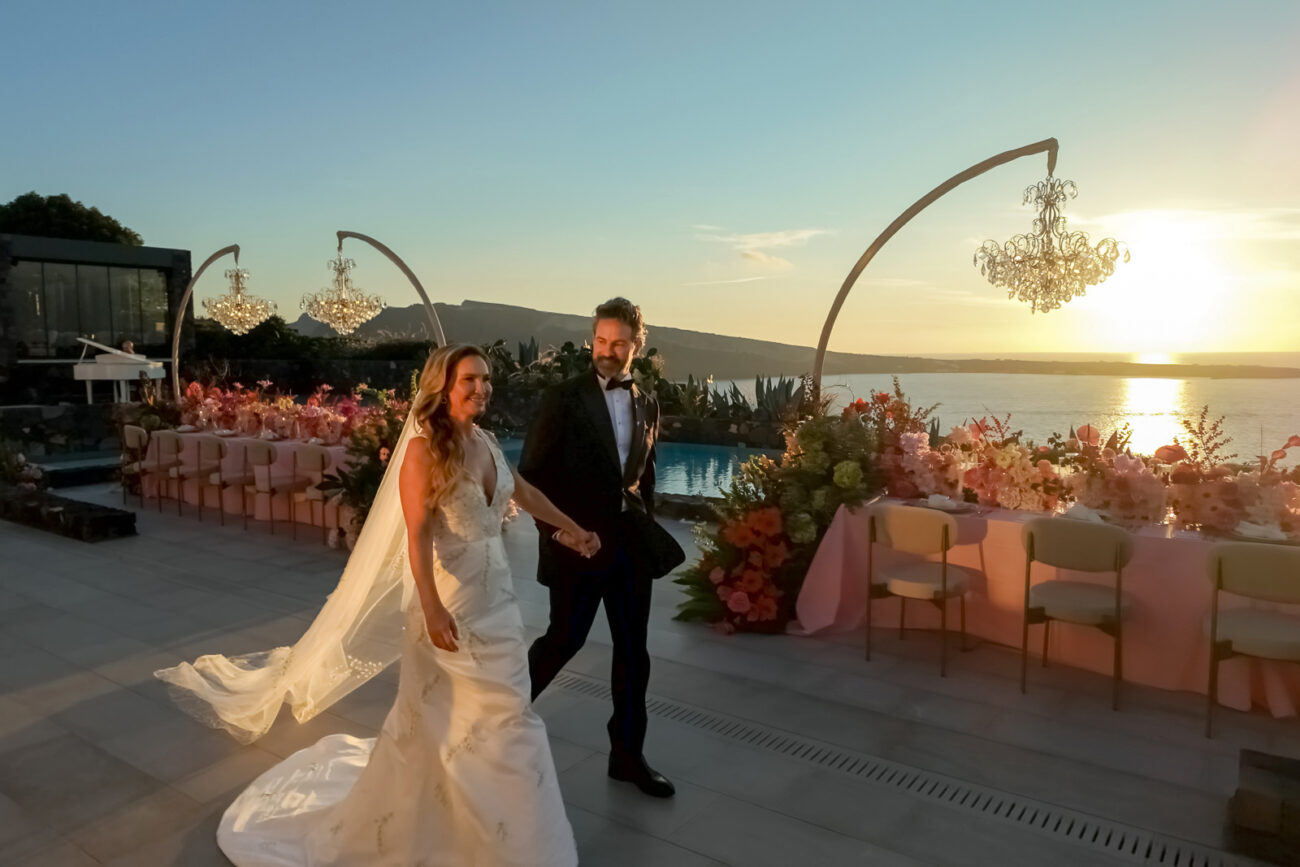
As a broad orientation, not a quote, an intimate celebration of around thirty to forty guests may begin somewhere around €28,000 to €55,000, depending on location, catering standard, visual production, and whether the celebration extends beyond one day.
A mid-size destination wedding of around sixty to eighty guests at an established island venue may often sit somewhere around €70,000 to €140,000, especially once welcome events, logistics, and stronger production are added.
Larger celebrations of one hundred guests or more at premium Santorini or Mykonos venues, particularly with multi-day programming and a high-end international team, may move into the €180,000 and above range quite quickly.
These figures depend on many factors, including location, venue, guest count, season, number of events, transportation, accommodation expectations, design ambitions, and the calibre of the team involved. They are useful only as a broad frame for expectation, not as a market-wide rule.
The most useful starting point is not to ask what weddings in Greece cost in the abstract, but what kind of destination wedding you are actually trying to build, and how that destination behaves in practice.
If you are comparing Greece with other European destinations, I have also written a broader guide to destination wedding costs in Europe with examples from Santorini, Tuscany, and the South of France.
Think in Terms of Access, Experience, and Priorities
In Greece, the budget often follows access and structure as much as style.
A destination that is easy for guests to reach, easy for suppliers to operate in, and flexible in season will behave differently from an exposed island venue where everything depends on timing, transfer, and availability. The more your celebration asks the destination to do, the more the destination itself becomes part of the budget.
This is why guest experience, photographic priorities, atmosphere, and the number of days should all be considered early. Decide what matters most to you and your guests and allocate accordingly. A wedding built around clear priorities usually feels more generous and better resolved than one trying to divide everything evenly across categories.
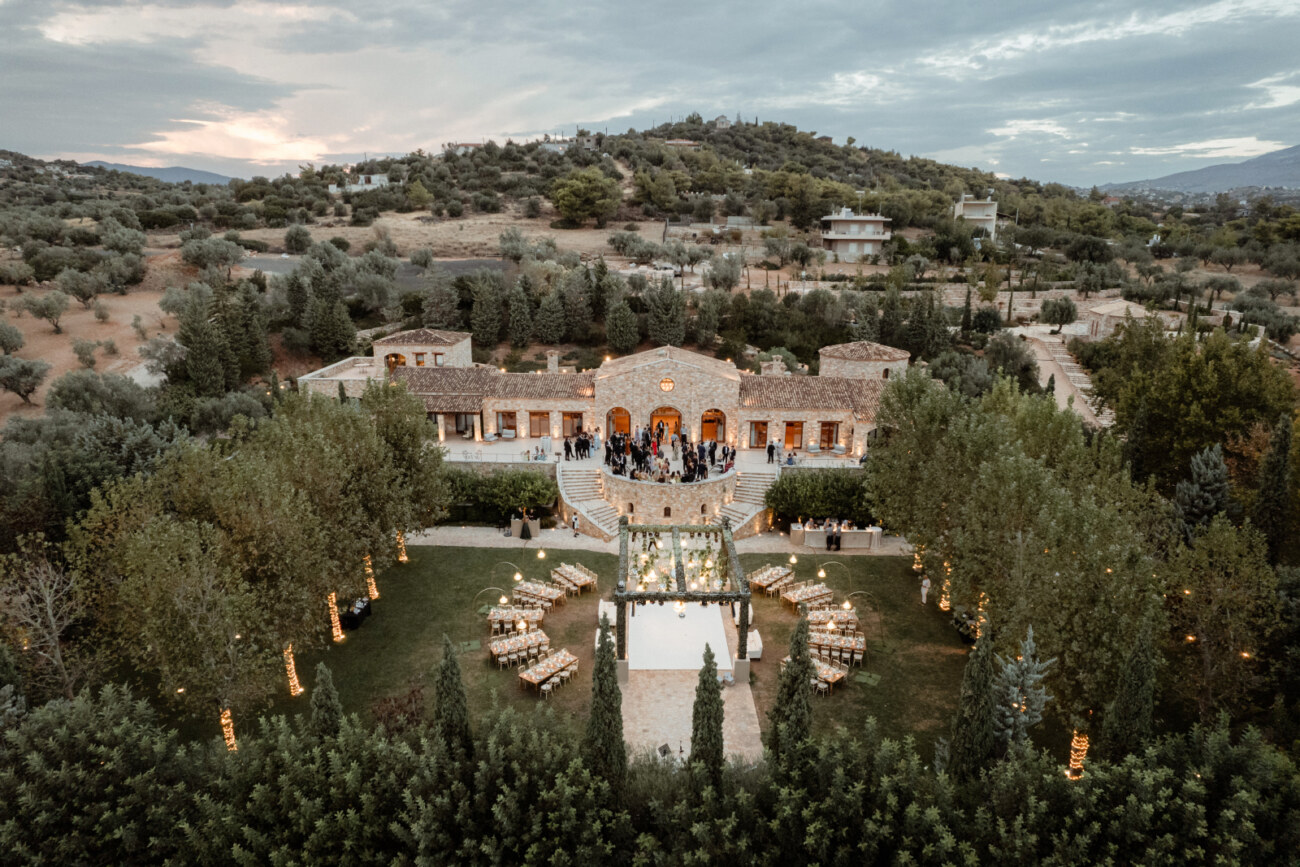
How to Plan a Destination Wedding in Greece From Abroad
Planning from abroad is part of the nature of most destination weddings in Greece, but the process can feel very different depending on whether you are planning in Athens, on the mainland, or on an island.
What makes Greek wedding planning easier is not simply choosing a beautiful destination early, but understanding the practical behaviour of that destination. How will guests arrive? How exposed is the wedding to wind or ferry disruption? Is the season compact? Does the venue stand largely on its own, or does the wedding require movement between multiple places? Does the island support a smooth guest experience for your particular group, or would a mainland or Riviera setting serve them more generously?
These questions matter because in Greece, the emotional tone of the wedding is often inseparable from the travel reality around it. A destination that is stunning but difficult for half the guest list may not actually support the kind of celebration you want to create. A less obvious choice may produce a stronger experience simply because it allows everyone, including you, to move through the weekend with more ease.
A Practical Order That Makes the Process Easier
For most couples planning from abroad, the process feels far more manageable when each decision builds naturally on the previous one:
- Clarify the kind of celebration you want
Decide whether the wedding is intimate or expansive, one day or multi-day, island-based or more accessible. - Choose the part of Greece that supports that structure
This decision should follow from the first, not precede it. Let the destination follow the experience, not simply the image. - Set a realistic budget before you approach venues
In Greece, location, guest logistics, and event structure affect financial reality very quickly. - Secure the venue
In Greece, particularly on islands and for peak season dates, sought-after venues book well in advance. - Bring in a planner, if needed, before complexity grows
A planner who knows your specific island or region is one of the most stabilising decisions in the whole process. Ideally, they come in early, before or alongside the venue search. This is especially important for island weddings, larger guest lists, or layered schedules. - Build the vendor team with destination fluency in mind
Once the venue and planner are confirmed, the creative team should follow without delay. Talent matters, but so does the ability to work calmly within the real conditions of Greece. - Inform your guests early and clearly
International guests need time to arrange flights, accommodation, and in some cases, additional ferry or domestic connections.
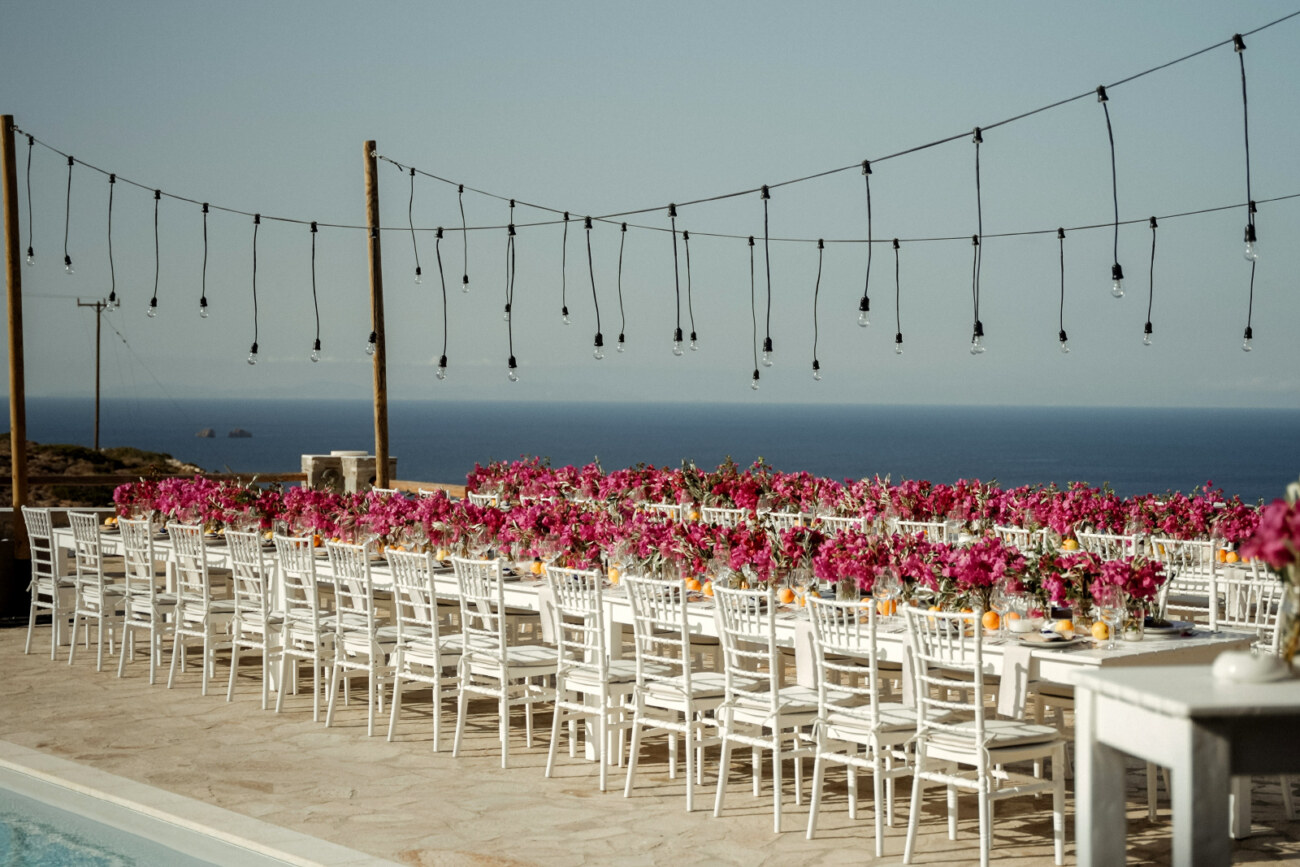
Do You Need a Wedding Planner for a Destination Wedding in Greece?
For many weddings in Greece, the answer depends less on aesthetics and more on logistics. Island weddings introduce layers that are easy to underestimate from abroad: ferry and domestic flight dependencies, weather-related disruption, guest coordination across arrivals, and the realities of planning in places where the season is compressed, and the local infrastructure can be stretched. For larger guest counts or multi-day celebrations, a planner is often one of the most stabilising decisions you can make.
That said, not every celebration requires the same level of support. Smaller symbolic ceremonies or intimate elopements can sometimes be planned without a full-service planner, particularly when the structure is simple, the guest count is very low, and the couple is comfortable organising details directly. In these cases, strong communication with the venue and a carefully chosen vendor team becomes even more important.
The question is not whether every destination wedding in Greece needs a wedding planner, but whether the scale and complexity of your celebration justify one. In practice, the larger and more layered the event becomes, the more valuable professional planning usually is.
Questions Worth Asking a Greek Wedding Planner Before You Hire
If you do decide to work with a planner, the right questions early on can tell you far more than a beautiful Instagram feed or a polished website.
- How many weddings have you planned on this island or in this exact region?
- How do you handle ferry or domestic flight disruption for guests?
- What is your contingency plan for strong winds on an exposed outdoor ceremony day?
- Which suppliers need to be sourced from Athens or the mainland?
- How do you manage guest communication when arrivals are spread across multiple routes?
These questions matter because they reveal whether a planner has real operational experience, not just a beautiful portfolio.
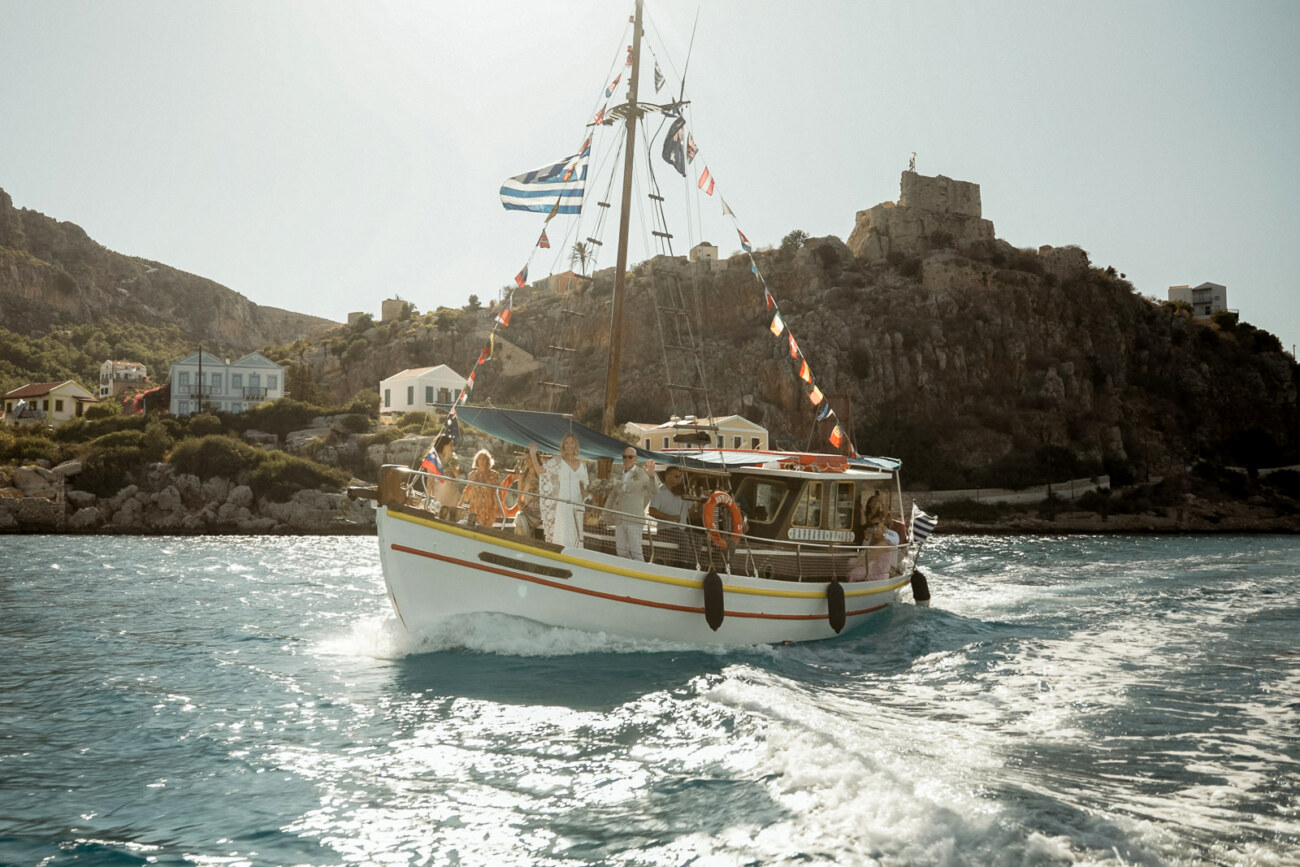
Legal or Symbolic Ceremony in Greece
For international couples, a legally valid civil ceremony in Greece involves documentation requirements that vary by nationality and can add significant administrative weight to the planning process. Most destination couples choose a symbolic ceremony in Greece and handle legal formalities at home before or after the celebration. This keeps the Greek celebration centred on the experience rather than the paperwork.
If civil validity in Greece is important to you, the most reliable starting point is the official Greek government guidance on obtaining a marriage licence, together with your planner, the relevant consulate, and the local authority where the wedding will take place. Requirements change, and country-specific guidance should always come from official government or embassy sources. The process is manageable with the right support, but it is worth understanding early before date and venue commitments are made.
Think About the Guest Experience Early
Destination weddings in Greece often ask more of guests logistically than couples first realise. International flights, domestic connections, ferries, changing accommodation, and island timing can all shape how people arrive emotionally as much as physically.
That is why guest experience should not be treated as a decorative add-on. In Greece, it is often part of the foundation of the celebration itself.
Ferry and flight dependencies deserve particular attention for island weddings. A guest list that includes older family members, young children, or people travelling from particularly distant origins benefits from careful coordination and clear communication. A simple travel information document, sent early, can remove a surprising amount of confusion and stress.
For some weddings, this means choosing a destination that reduces friction from the beginning. For others, it means designing enough support around the destination that guests can move through it with ease. The same island that feels idyllic in imagery can become tiring if arrivals are fragmented, information is unclear, or movement between events is handled too loosely.
This is also why places such as Athens and the Riviera can be stronger choices than couples first assume. They may offer less fantasy at first glance, but more generosity in practice, especially for guest groups coming from multiple countries.
The Best Destination Weddings in Greece Often Feel Like Shared Time
Greece is especially powerful when the wedding is allowed to unfold as shared time rather than a single formal event.
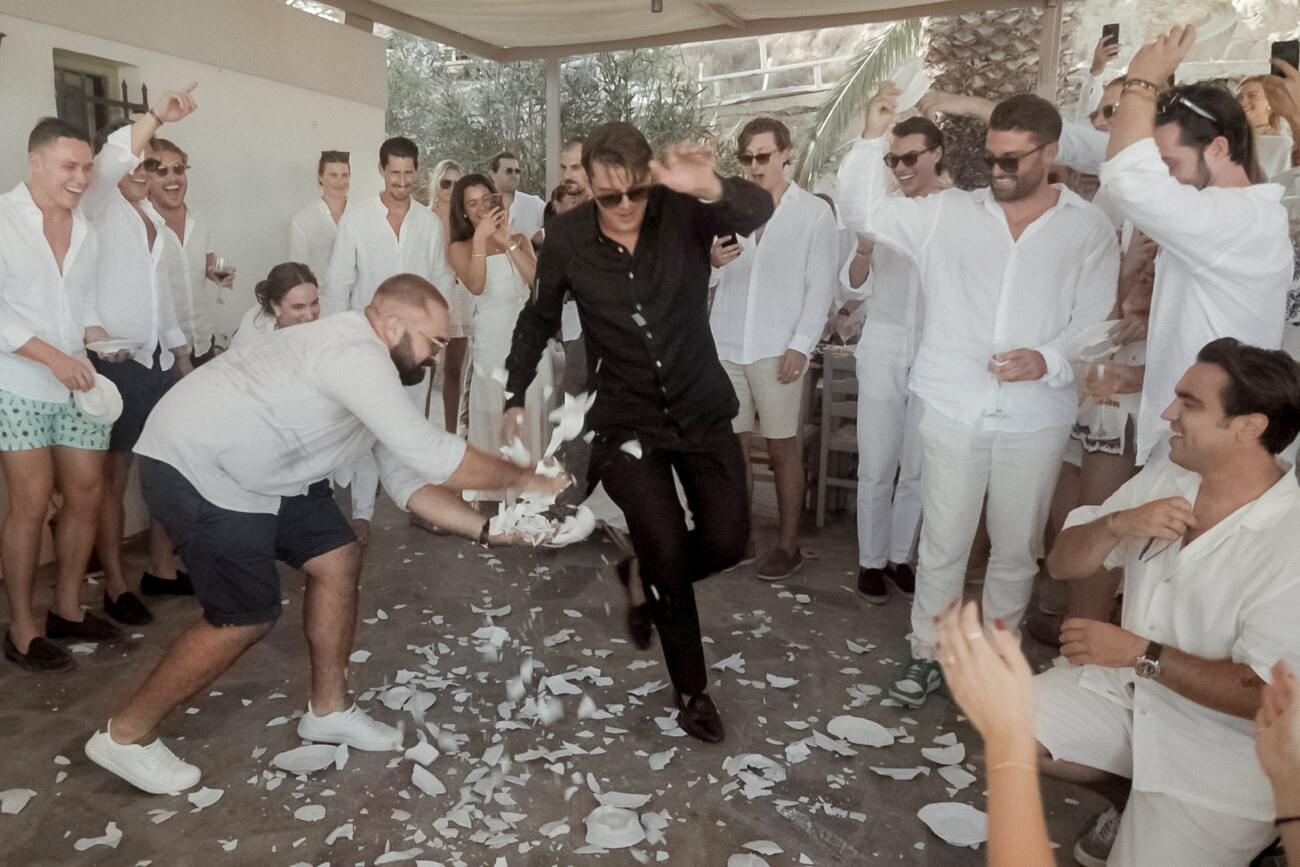
A welcome dinner by the sea, a slow lunch the day after, a swim before the farewell brunch, time together between one planned moment and the next, these are often the moments that give a Greek destination wedding its particular emotional quality. The country lends itself naturally to that rhythm.
Couples who think about guest experience early often end up making better decisions across the whole process. They choose destinations more wisely, structure time more generously, and build a wedding that feels lived rather than merely staged in a beautiful place.
Choose Vendors Who Understand Greece on the Ground
Aesthetic talent and practical fluency in a destination are not the same thing, and in Greece the difference matters.
A florist who has worked repeatedly on the island you have chosen knows which flowers are available locally and which need to be imported, what heat and wind will do to arrangements during an outdoor ceremony, and how to work within the specific limits of the venue. A planner who knows the local vendor community understands which relationships make logistics smoother under pressure.
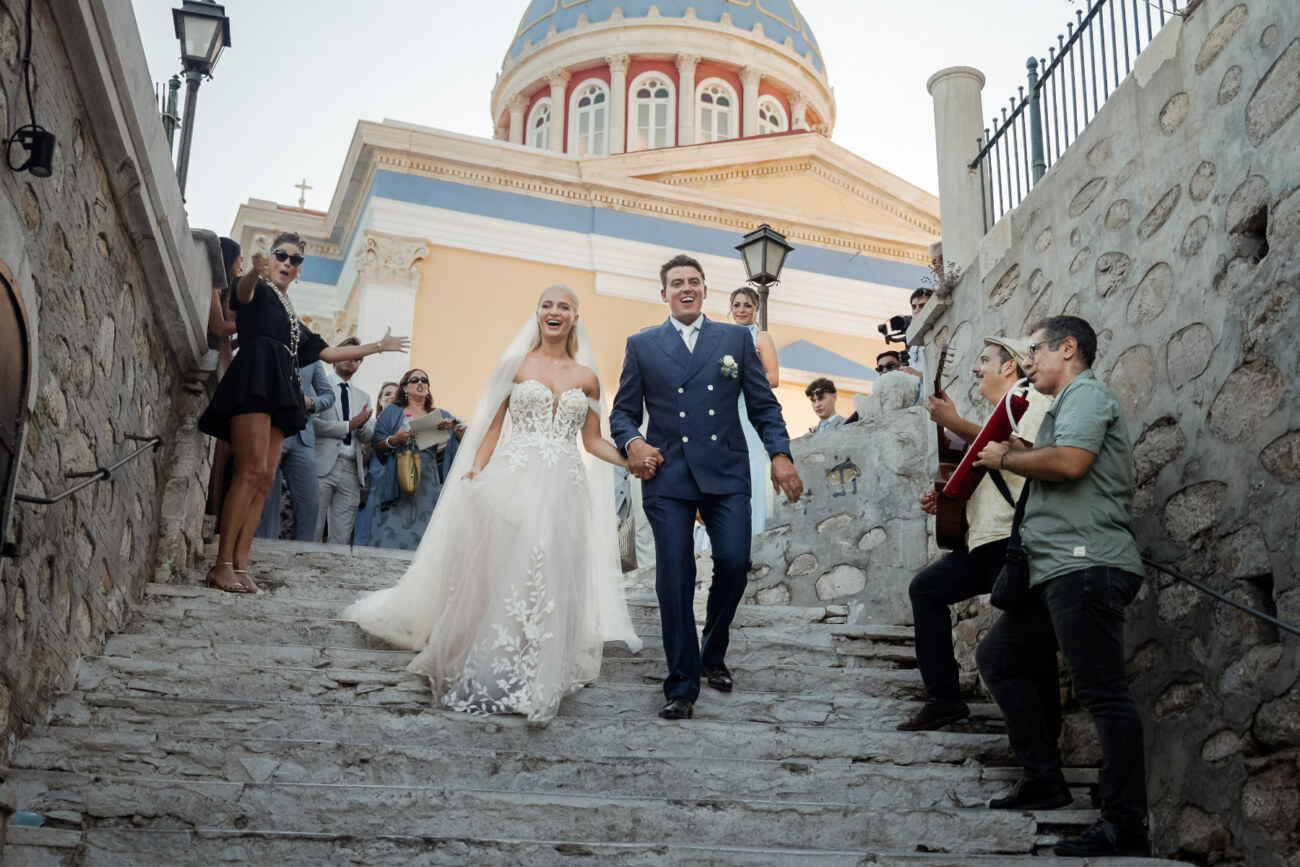
For photographers and videographers specifically, familiarity with the light conditions of different Greek destinations changes the quality of the work in ways that are difficult to replicate without direct experience. The way golden hour moves across a Santorini caldera is not the same as afternoon light on an Ionian hillside or the bright reflective intensity of a whitewashed Cycladic village at midday.
Kostas is based in Athens and works across Greece, returning regularly to document weddings in Santorini, the Athens Riviera, and beyond. That familiarity with Greek light, Greek logistics, and the rhythm of Greek celebrations informs every film made here, and it is part of what makes the work feel connected to the place rather than simply set within it.
What Videography Means in the Context of a Destination Wedding in Greece
Planning a destination wedding in Greece involves much more than organizing a ceremony. It encompasses guest arrival, event atmosphere, the quality of time shared between people who have travelled to be together, the light at six in the evening over the sea, and the texture of a welcome dinner on a terrace above the water.
A wedding film made in Greece, when it is made well, does not simply document what happened. It holds the atmosphere of the place and the emotional weight of the gathering in a way that still images alone cannot. Movement, sound, and the shifting light of a destination celebration all carry memory differently.
My approach to destination wedding filmmaking in Greece is rooted in observation and intentional narrative. I do not stage or direct. I watch, I wait, and I build a film around the story of each couple, using the setting as context rather than subject. Greece provides extraordinary visual conditions, but the films remain guided by the people at their centre, not the landscape behind them.
For couples still deciding what to look for before booking, this guide on choosing a wedding videographer in Greece offers a more detailed way to compare style, coverage, local experience, and the questions worth asking. You can also explore my approach and videography work in more detail on the Greece Wedding Videographer page.
For smaller or more intimate celebrations, the Elopement Videographer page offers a sense of how smaller-scale stories are approached.
A glimpse into how a wedding story in Greece can be translated into film:
Wedding, Elopement, or Something in Between
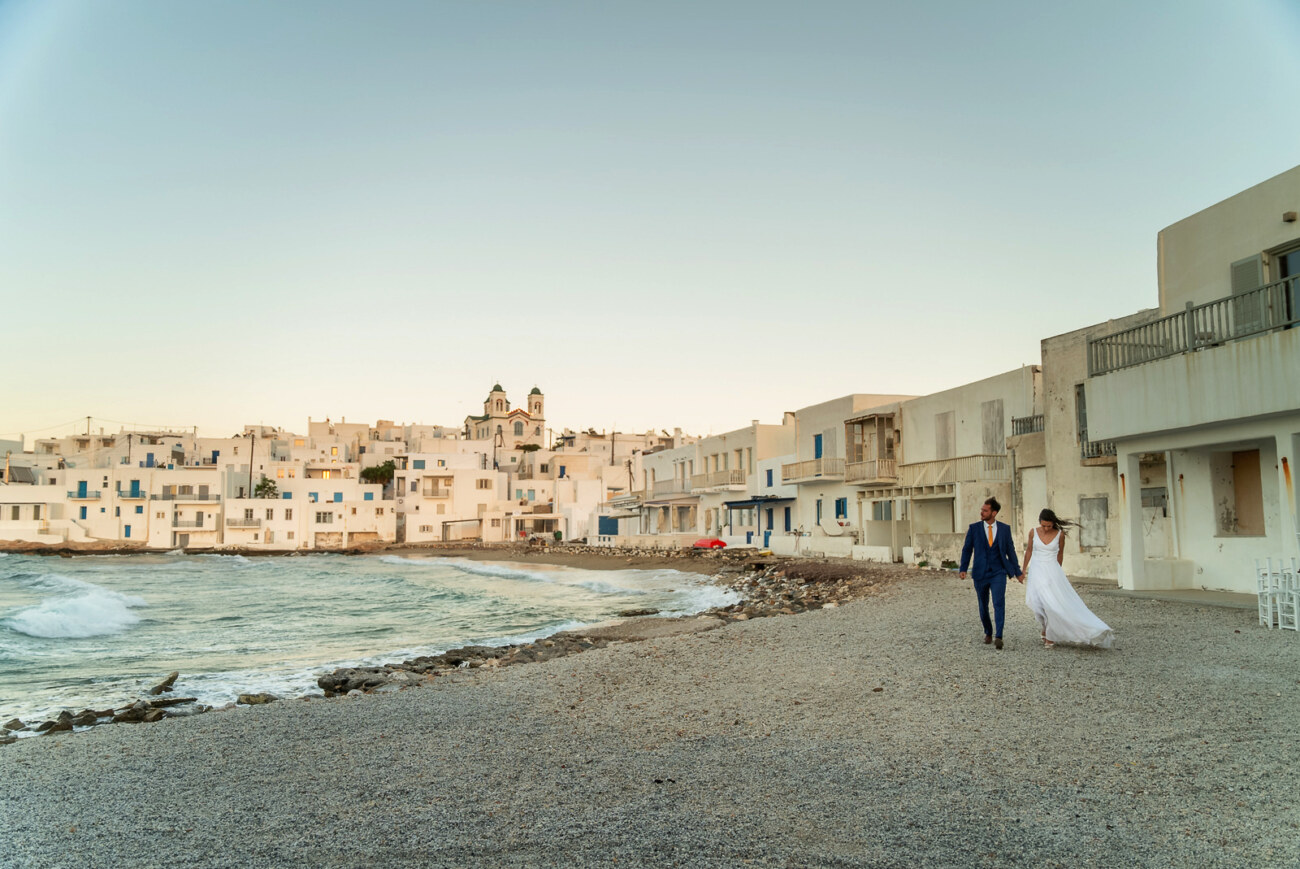
The distinction between a destination wedding and an elopement has become less fixed than it once was. Many couples drawn to Greece are looking for something in between; intimate enough to feel personal, substantial enough to gather the people who matter most.
Greece accommodates this spectrum naturally. A ceremony for twenty people on a hillside in Folegandros can share much of the intimacy and intentionality of an elopement. A larger celebration in Santorini or Corfu can still feel deeply personal if the experience is built around the couple rather than scale and spectacle.
Whatever the format, the most important question remains the same: what kind of experience do you want to create, and who do you want present for it?
Frequently Asked Questions About Planning a Destination Wedding in Greece
If you are still clarifying the practical side of how to plan a destination wedding in Greece, these are some of the questions couples most often ask.
How far in advance should you plan a destination wedding in Greece?
For peak-season dates between May and October, begin the planning process at least twelve to eighteen months in advance, and earlier for the most sought-after venues in Santorini and Mykonos. Venue and planner usually come first, because they shape everything else.
What is the best month for a destination wedding in Greece?
September is widely regarded by many wedding professionals in Greece as one of the finest months. The summer heat has softened, the meltemi has receded, the sea is at its warmest, crowds have thinned, and the light is exceptional. May and early October are also very strong, with a slightly different seasonal character. The best month depends on which part of Greece you are marrying in and what atmosphere you want.
Do you need a wedding planner for a destination wedding in Greece?
For most international couples, yes. A planner with real local experience manages logistical layers that are often invisible from abroad; vendor relationships, venue-specific requirements, island coordination, contingency planning, and day-of flow. For island weddings in particular, this is often one of the most important investments in the entire process.
What is the difference between getting married in Santorini and Mykonos?
Santorini is more caldera-focused, ceremonial in atmosphere, and visually defined by its volcanic landscape. It suits couples drawn to a specific iconic aesthetic and a more contemplative celebration. Mykonos is more contemporary, cosmopolitan, and social, with venues and an atmosphere oriented toward movement and energy. Planning demands may be similar, but the experience of being there is genuinely different.
Can Americans get legally married in Greece?
Yes, but the documentation process varies by nationality and adds administrative weight to the planning. Many American couples choose a symbolic ceremony in Greece and complete legal formalities at home. For couples who require civil validity in Greece, current requirements should be checked through official Greek authorities and the appropriate embassy or consulate.
How much does a destination wedding in Greece cost?
Scale matters more than location alone. An intimate celebration of roughly thirty to forty guests might begin around €28,000 to €55,000, depending on destination, catering standard, and whether it extends beyond one day. A mid-size wedding of around sixty to eighty guests at an established island venue may often sit around €70,000 to €140,000. Larger celebrations of one hundred guests or more at premium Santorini or Mykonos venues with multi-day programming can reach €180,000 and above. These are broad orientation figures, not quotes. Guest count, venue, season, logistics, and production level all make a substantial difference.
What Greek islands are best for small, intimate weddings?
Folegandros, Milos, and some of the quieter Cycladic islands can offer a level of intimacy and seclusion that is increasingly rare in the better-known destinations. Corfu and parts of the Ionian also suit couples drawn to a greener, more layered landscape with less tourism pressure. Mainland settings such as Pelion and the Mani can also offer a deeply distinctive atmosphere for smaller celebrations.
Is Greece or Italy better for a destination wedding?
Both countries are among the finest destination wedding settings in Europe, and the right choice depends entirely on the couple. Greece offers island settings, Aegean light, and a culture of extended celebration that is difficult to replicate elsewhere. Italy offers historic villas, extraordinary culinary culture, and regional variety from the Amalfi Coast to Tuscany to Lake Como. Couples genuinely deciding between the two will benefit most from comparing the type of celebration each country naturally supports.
Final Thoughts
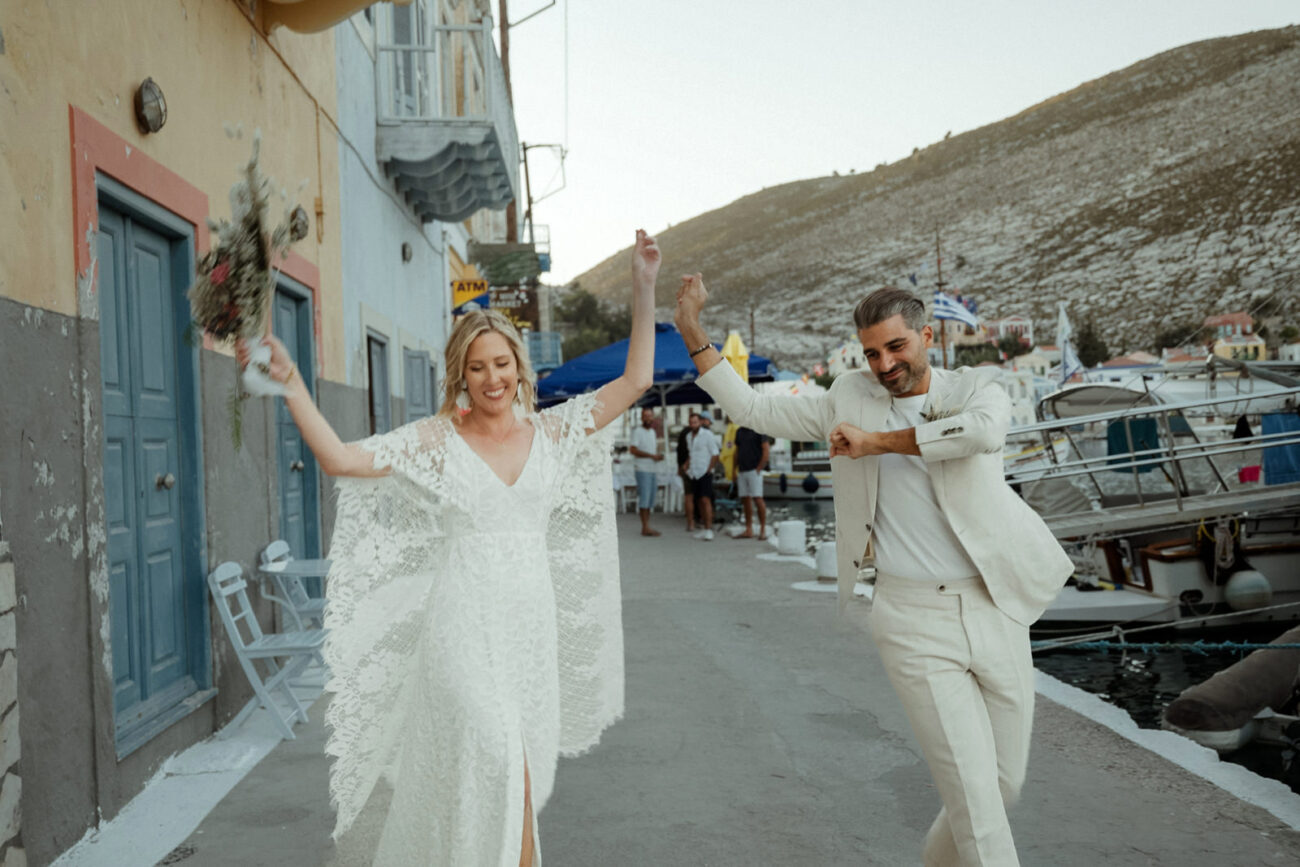
Greece rewards couples who plan with clarity and choose their team well. Its beauty is real and generous, but it does not manage itself. The difference between a destination wedding that feels effortless and one that feels strained is very often the quality of the decisions made before the first guest arrives.
Planning a destination wedding in Greece becomes much clearer once each decision is made in the right order. Start with the experience you want to create. Choose the part of Greece that suits it. Build a team with genuine local knowledge. Give your guests the time and information they need to arrive fully present. Then trust the place to do what it does best.
Greece has been gathering people for celebration for a very long time. It knows how to hold them.
Get in touch
If you are planning a destination wedding in Greece and would like to explore how your celebration could be documented with intention and clarity, I’d love to hear more about your plans.